Every gate we make is a welded steel frame with composite board set into it. That means two separate decisions on colour before you get anywhere near the shape, the top and the ironmongery. This page shows what each one actually looks like, rather than describing it.
Free survey and written quote. No obligation, and a straight answer on whether we cover your postcode.
It is the thing most people do not realise until the survey, and it changes what is possible. Composite board is infill — it carries nothing. The welded steel frame behind it takes the weight, the leverage on the hinges and the wind.
A gate leaf is a long lever working on two fixing points every day. Composite board on its own would flex and drop within a season. The frame is welded, not bolted, and the corners are the part that keeps the gate square for years rather than months.
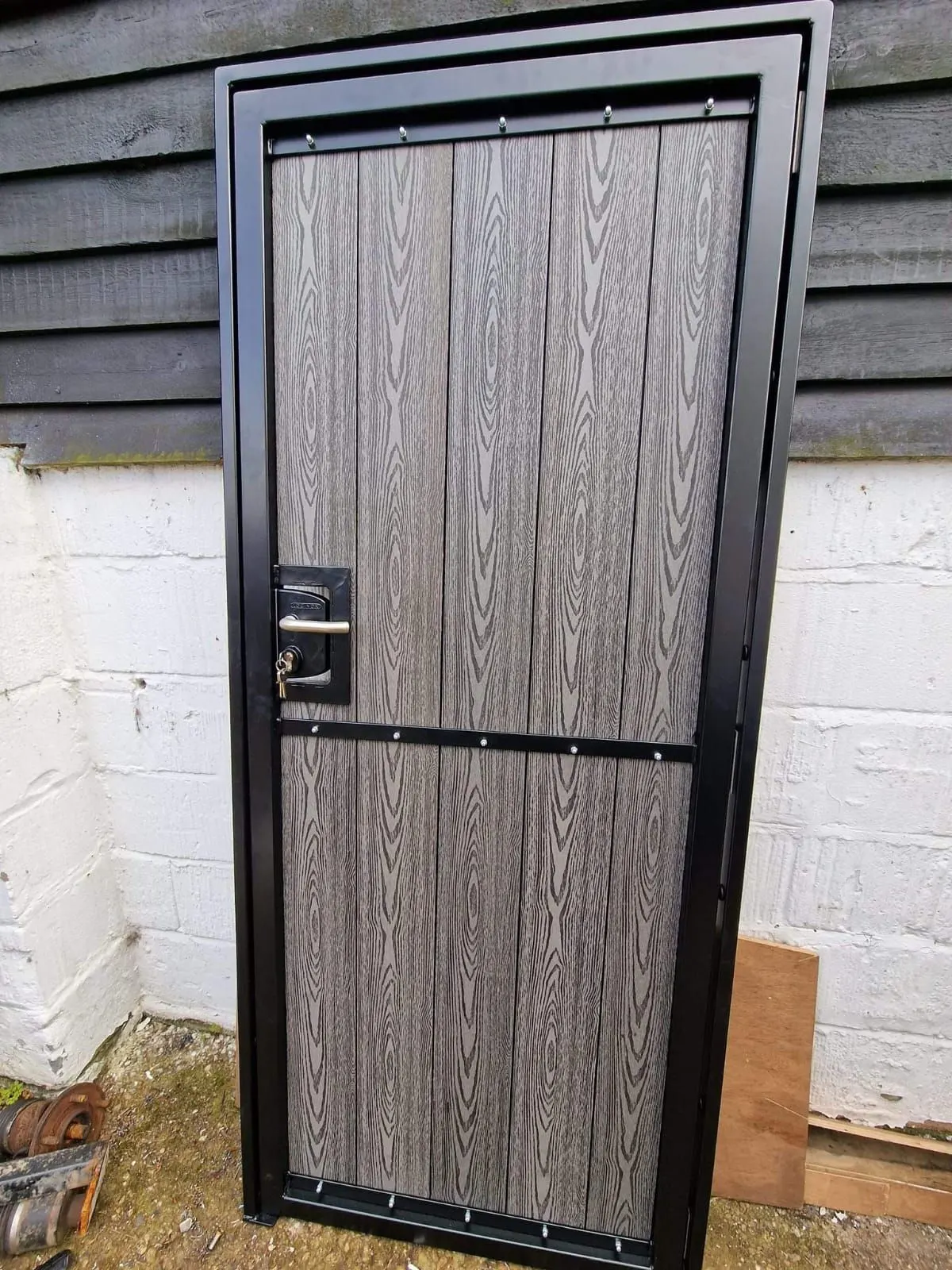
The frame is powder coated. The boards come in a fixed range of wood-effect colours. They can match, or they can deliberately contrast, and that is a decision worth making on purpose rather than by default.
Timber boards, mesh, perforated sheet or metal bars all sit in the same frame. If you want the look of a metal gate, it is the same construction with the composite left out — which is what our metal gates are.
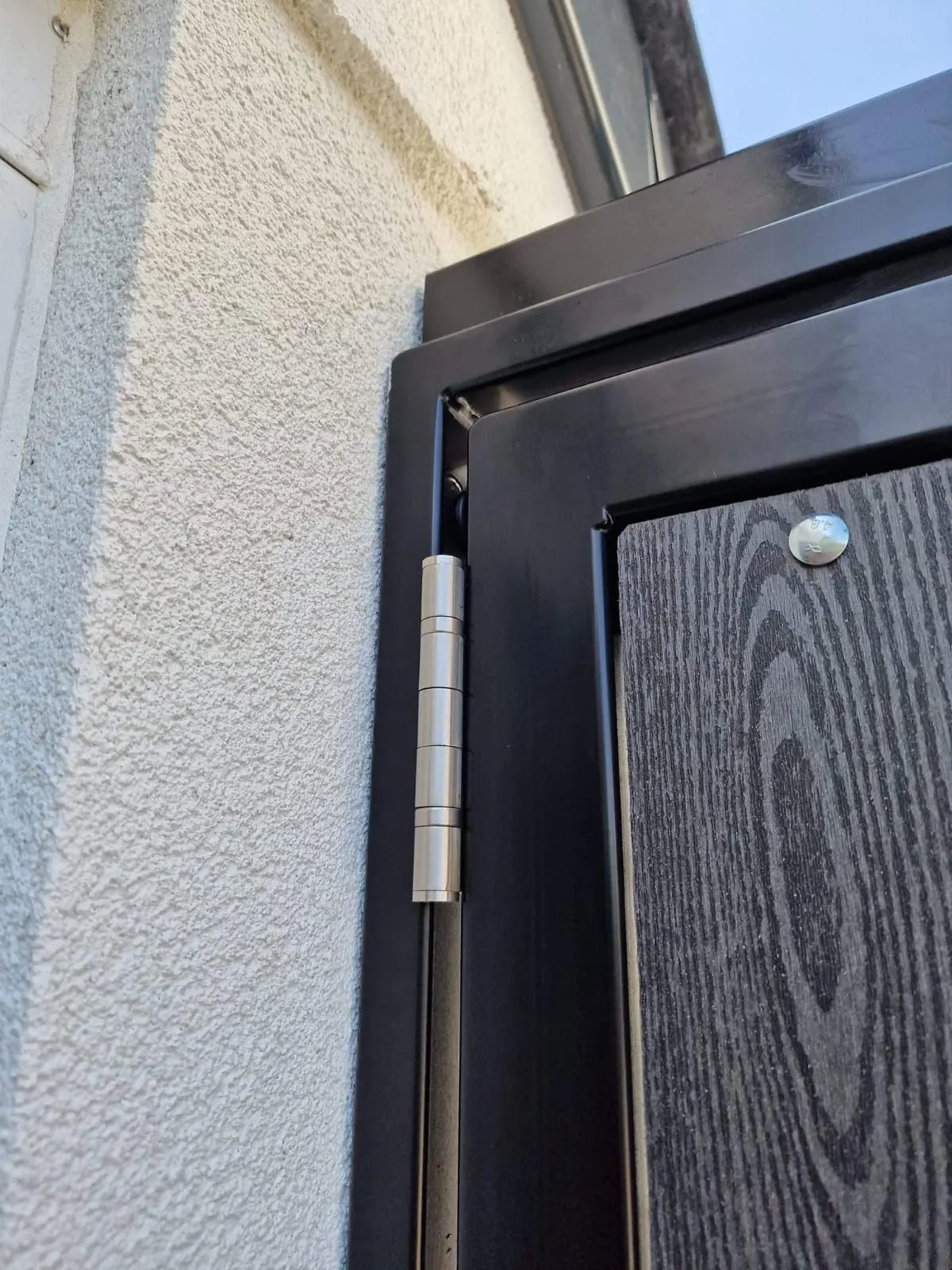
Frames are powder coated, and powder coating comes in the full RAL range. In practice almost everything goes out in one of three, because they sit well against modern windows and doors.
Anthracite grey has quietly overtaken black on newer properties. Black still looks right on a period frontage. A frame matched to the board colour reads as one object rather than a panel in a surround — a different effect, and not always the one people expect.
If you need a specific RAL to match existing railings, window frames or a front door, say so at survey. It is not an unusual request and it is not normally a long lead time. It is simply not a decision most people need to make.
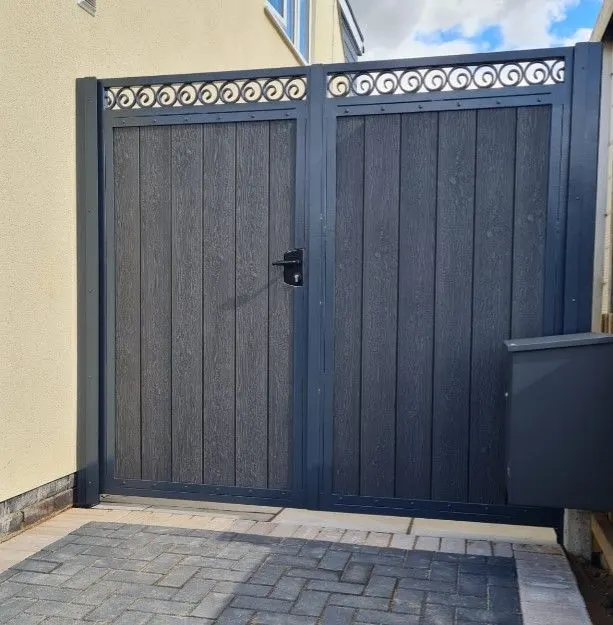
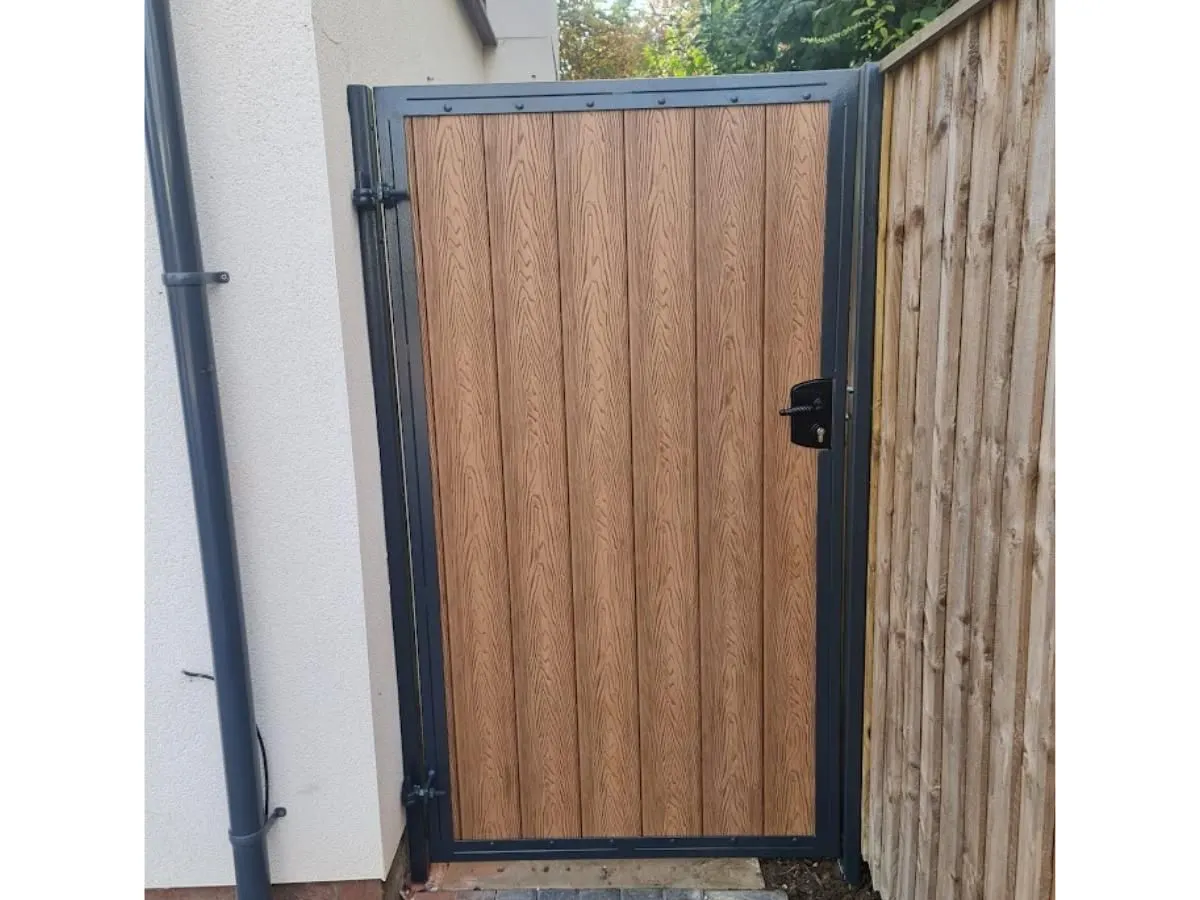
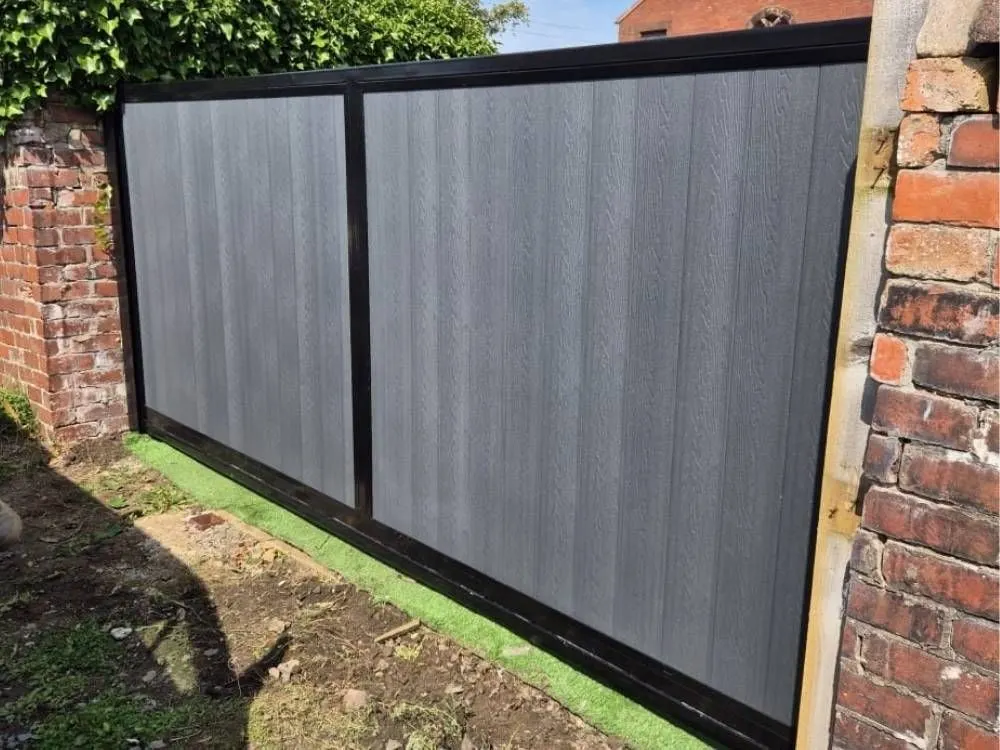
Seven wood-effect colours, deliberately kept to a small range so a gate made today still matches one made three years ago. Below is every one of them on a real gate rather than a swatch.
Black is the most common request and we do not make a black board. What people are usually picturing is charcoal, or anthracite grey in the shade. On this site black nearly always refers to the powder-coated metalwork — the frame, the hinges, the finials. If you want a gate that reads black from the road, it is anthracite or charcoal boards in a black frame.
All seven are through-coloured rather than surface printed, so a scuff does not show a different colour underneath. They will lighten very slightly in strong sun over years, more noticeably on the darker two, and they do not need painting, staining or oiling at any point.
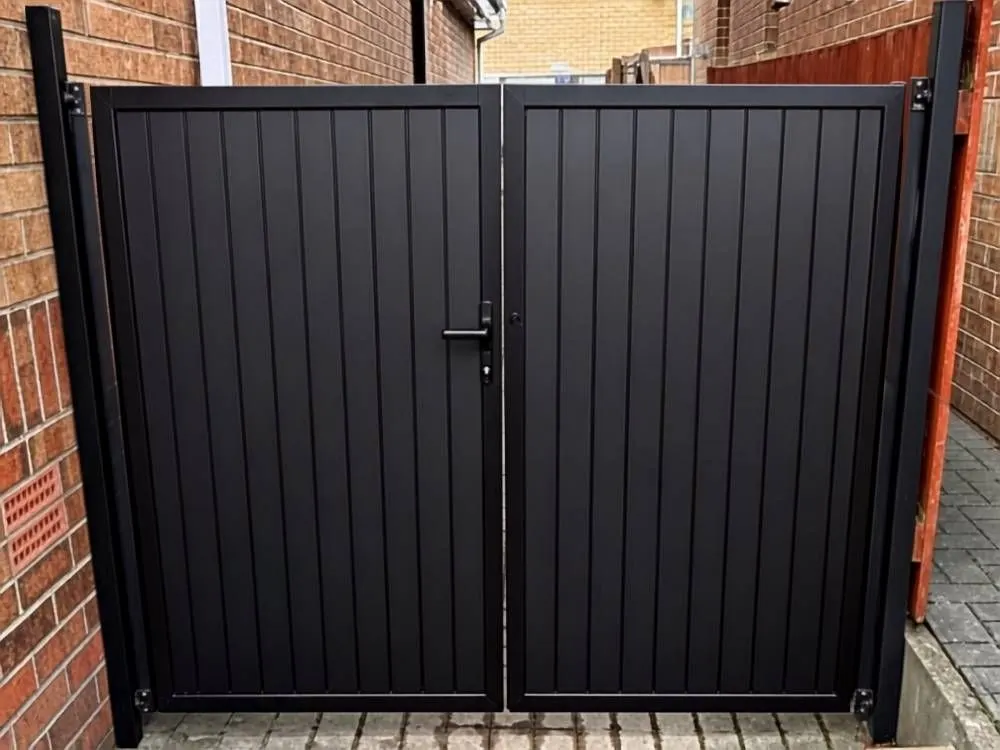
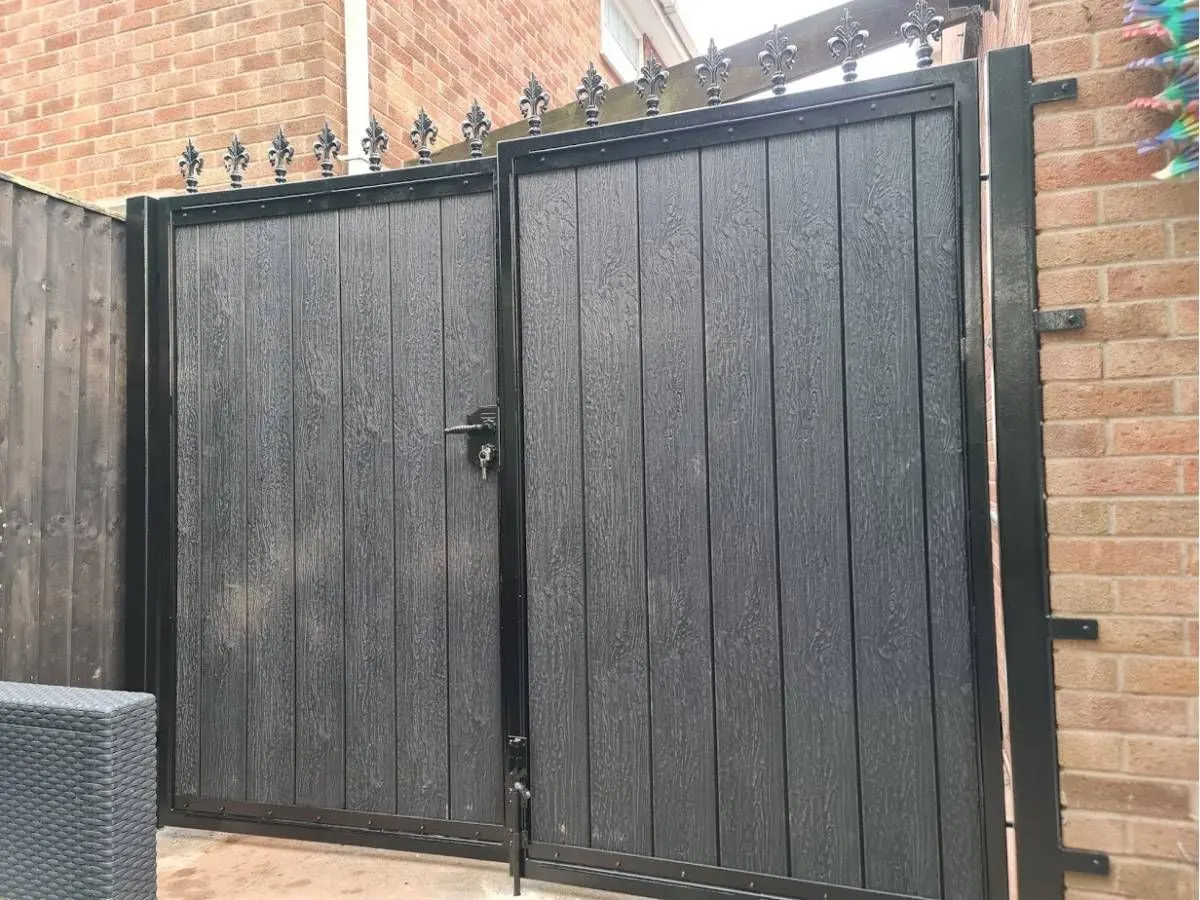
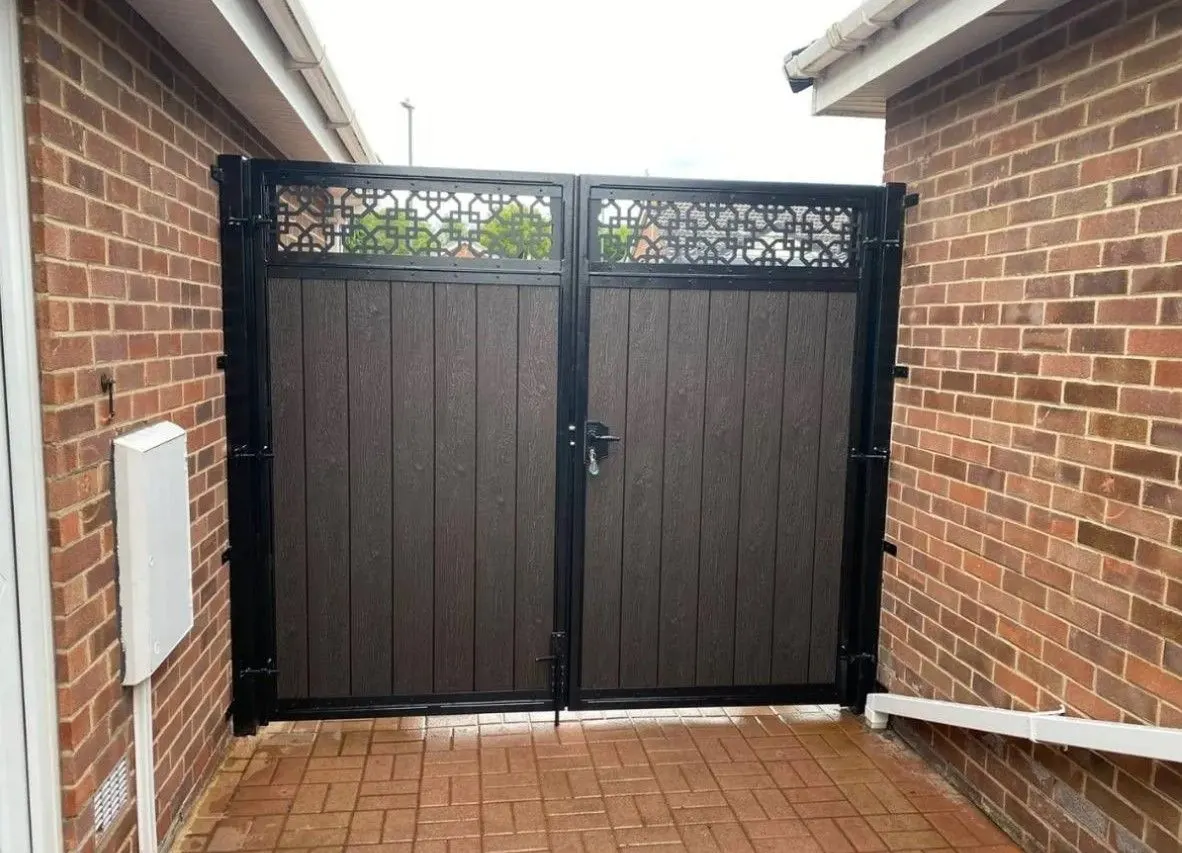
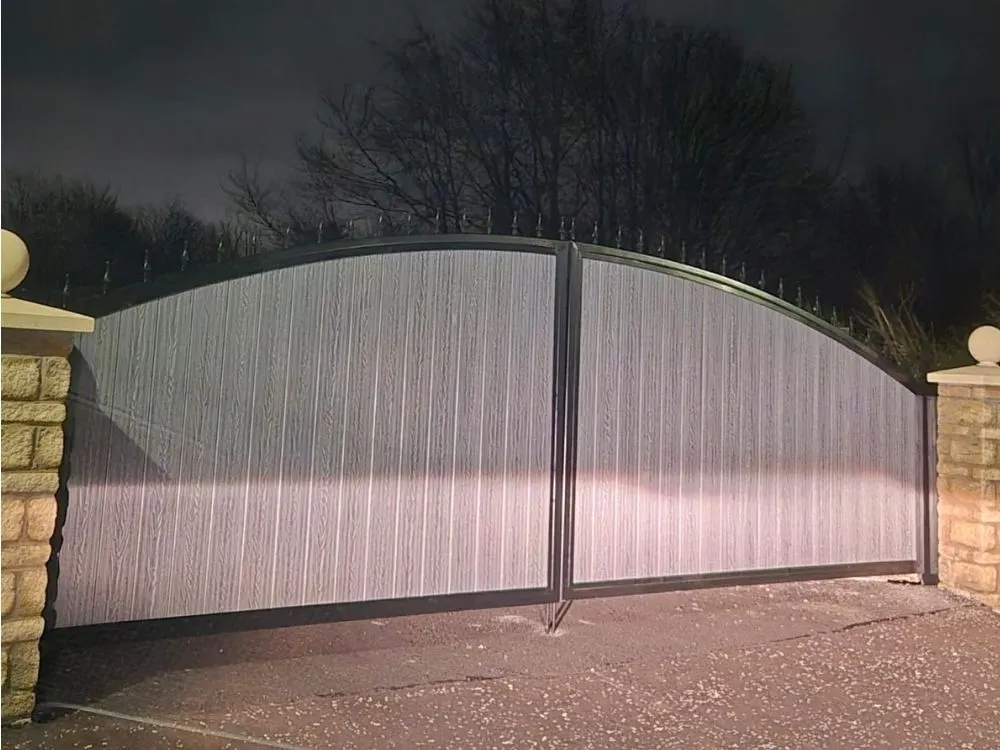
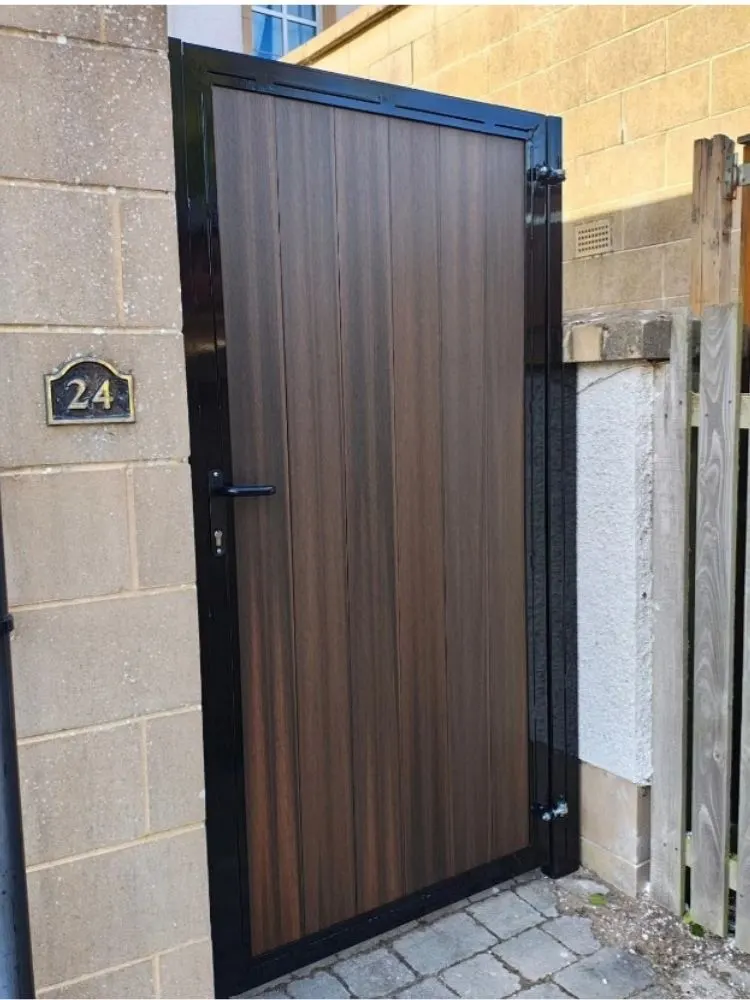
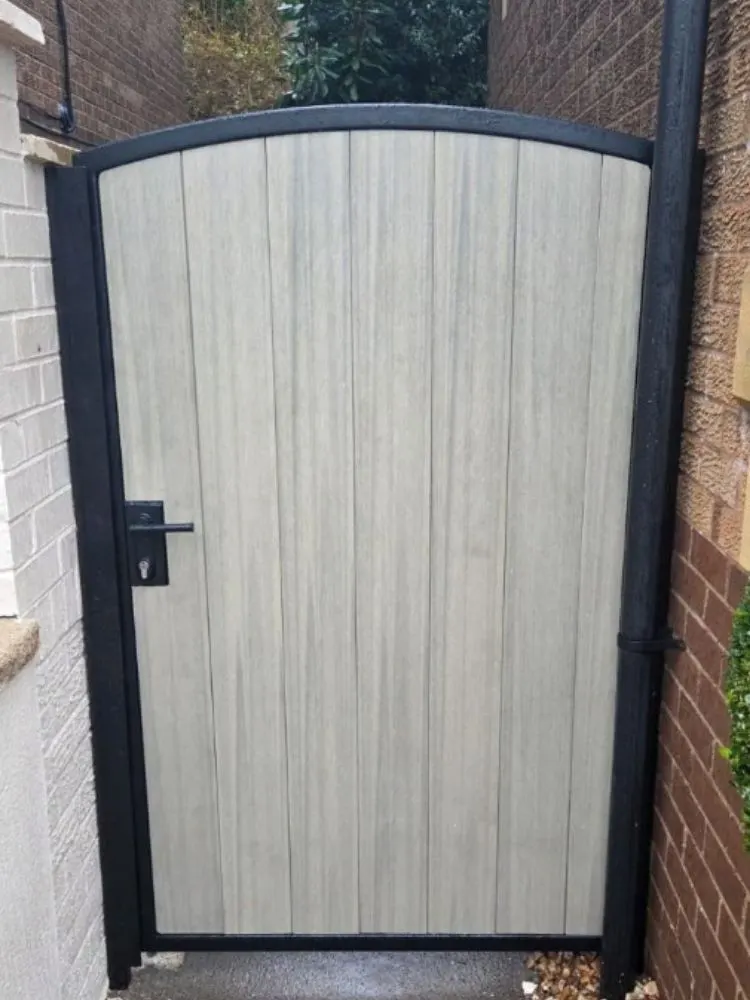
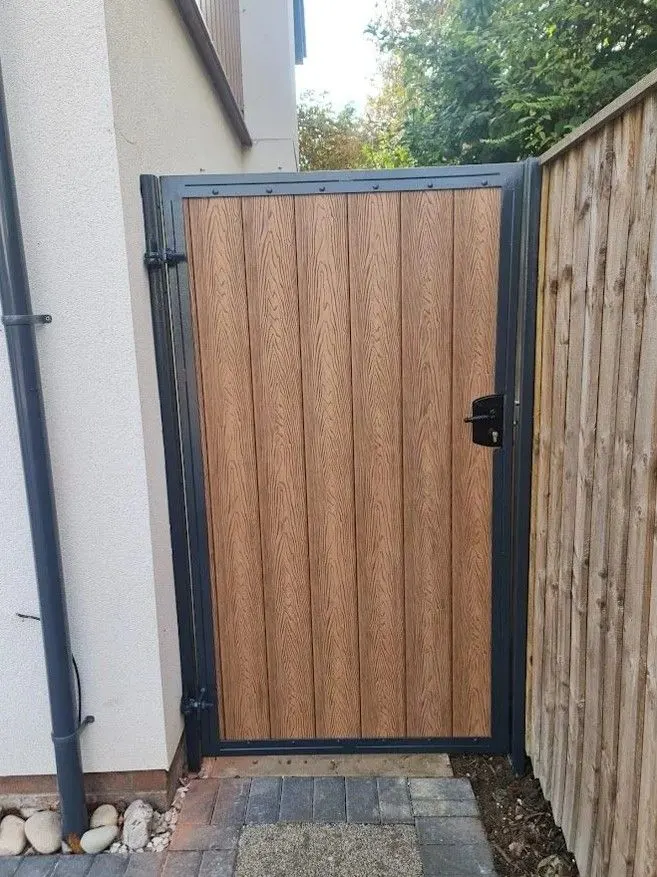
The top of the gate and the direction of the boards do more to change how a gate looks than the colour does, and both cost the same as flat and vertical on most gates.
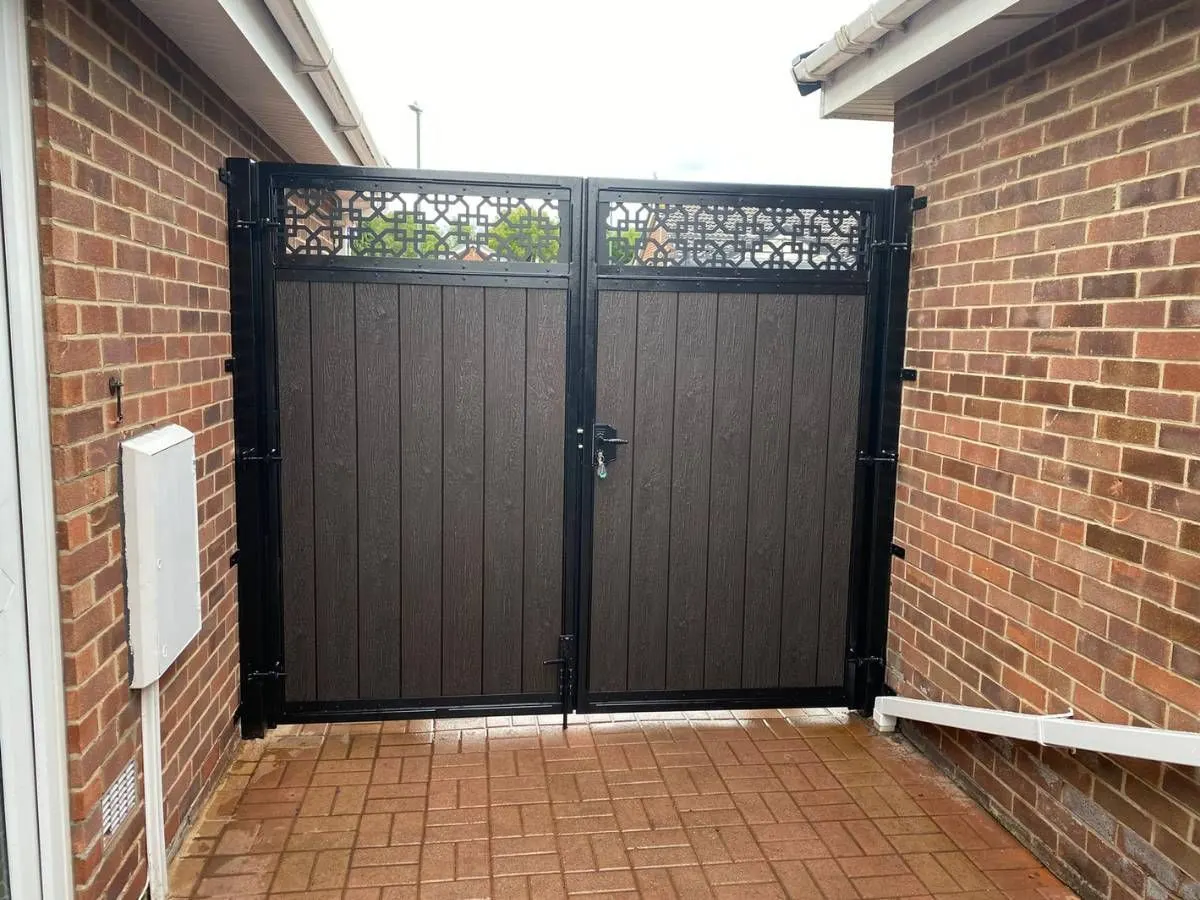
A flat top is the default and the quietest. A bow top rises gently to the centre. A fully arched top is the most decorative and the most work in the frame, because every board has to be cut to the curve. On a pair, the arch runs across both leaves and has to meet exactly in the middle.
Vertical is standard and reads as a gate. Horizontal reads as a panel, and on a modern rendered frontage it often looks more deliberate. Horizontal boards make a gate look wider and shorter, which is worth knowing if the opening is already wide.
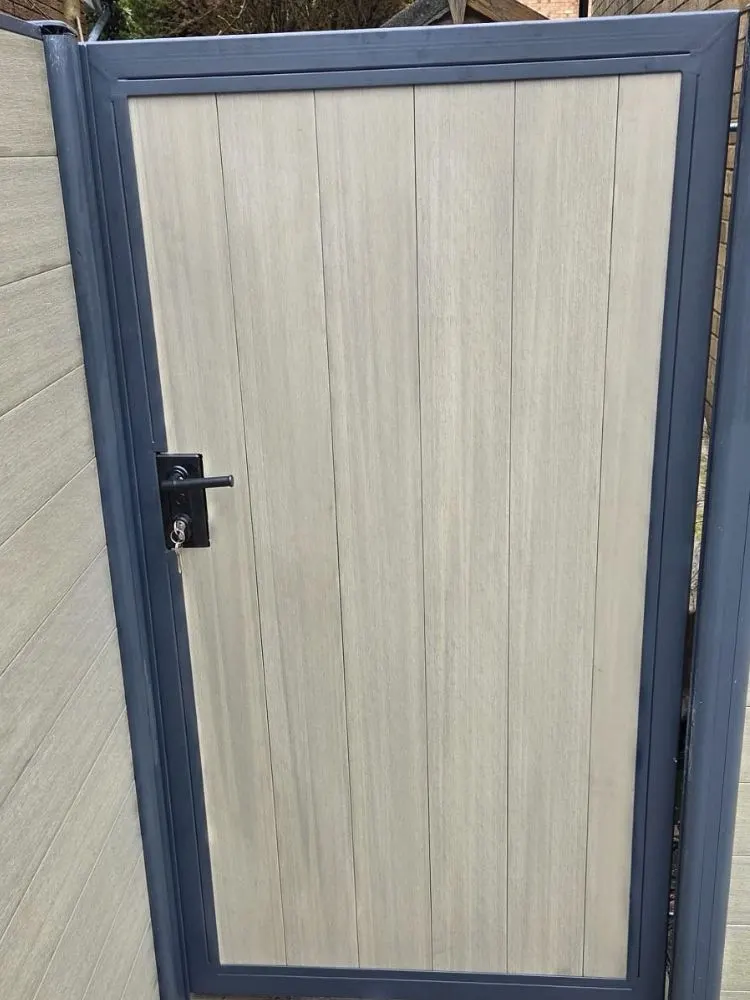
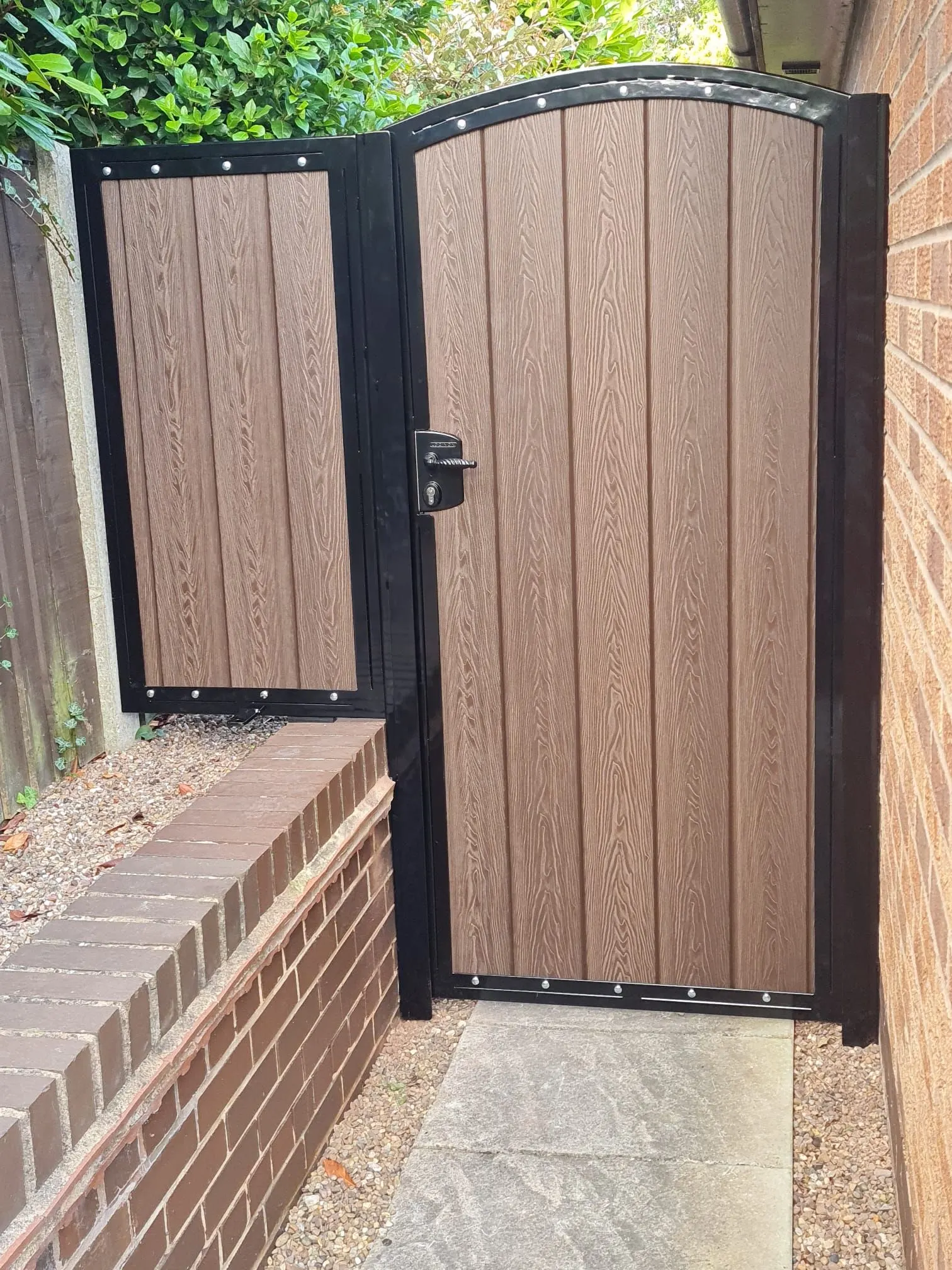
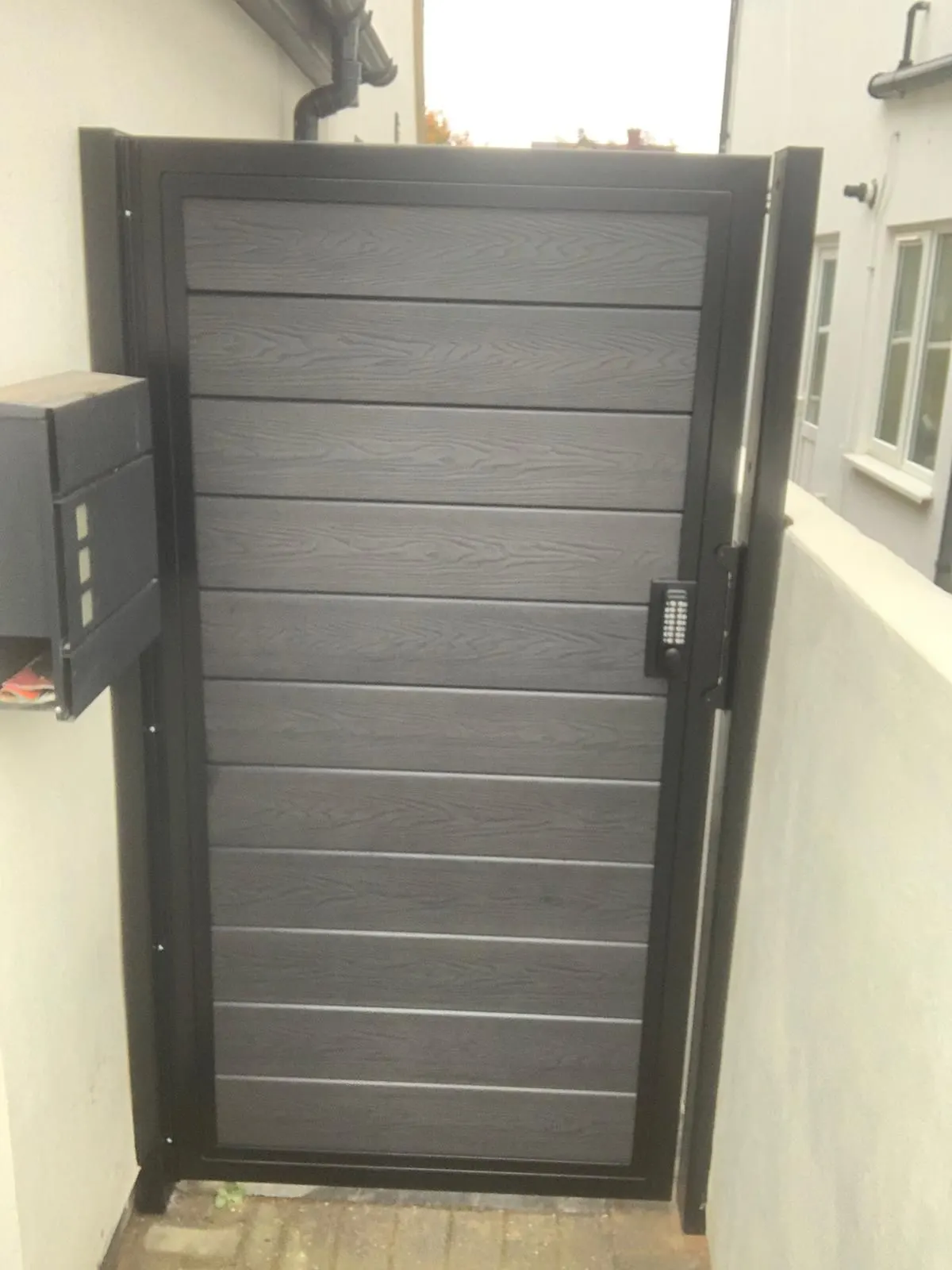
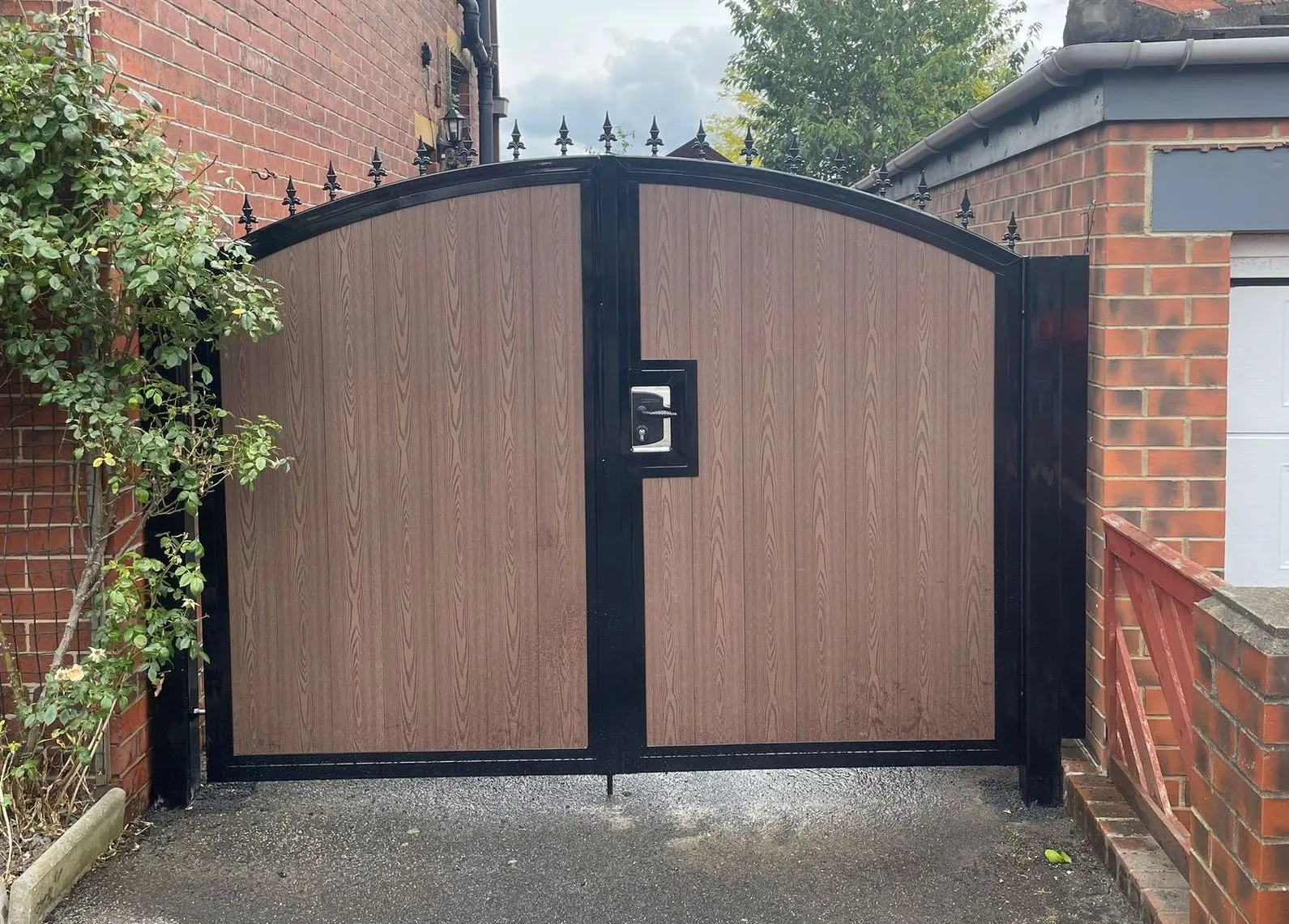
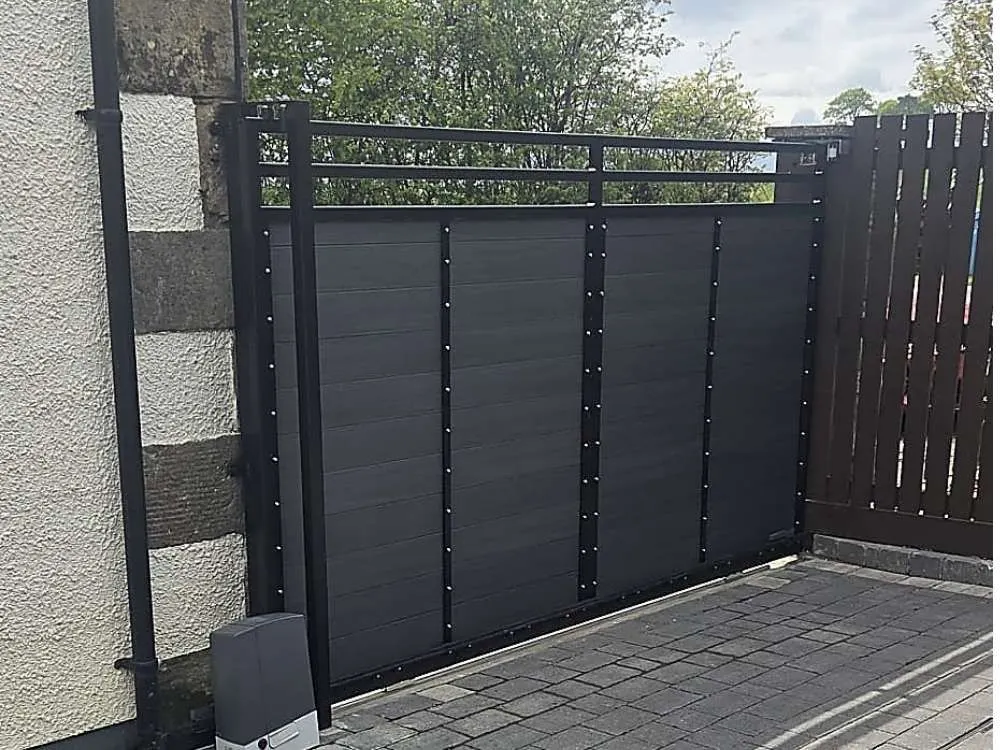
Anything above the board line is frame work rather than panel work, which is why it changes the price and why it is worth deciding early.
Height, mostly. A topper adds height without adding solid mass, so the gate stays under the threshold where a boundary structure would need planning permission and takes less wind than a solid leaf of the same height. The decorative effect is a bonus rather than the reason.
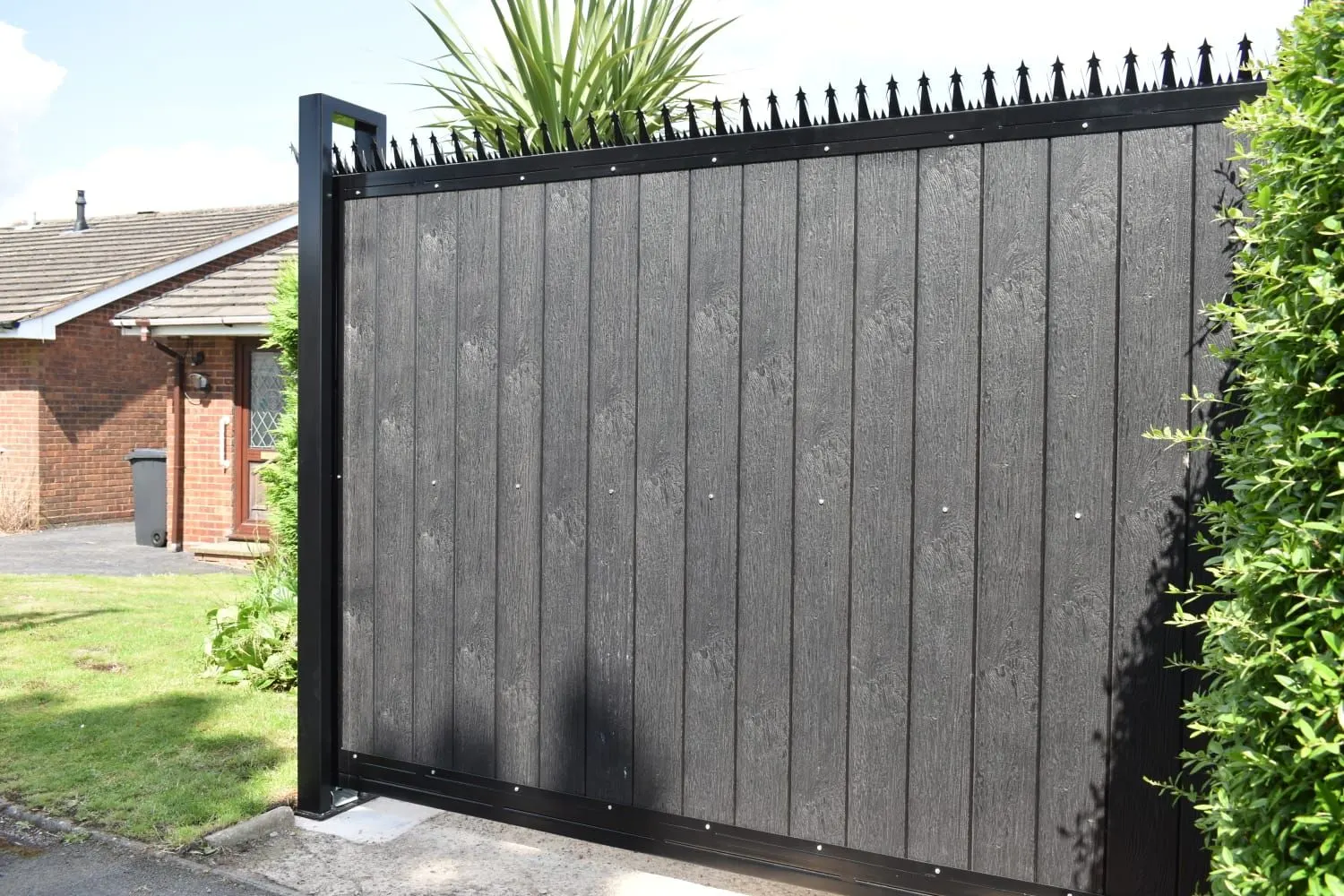
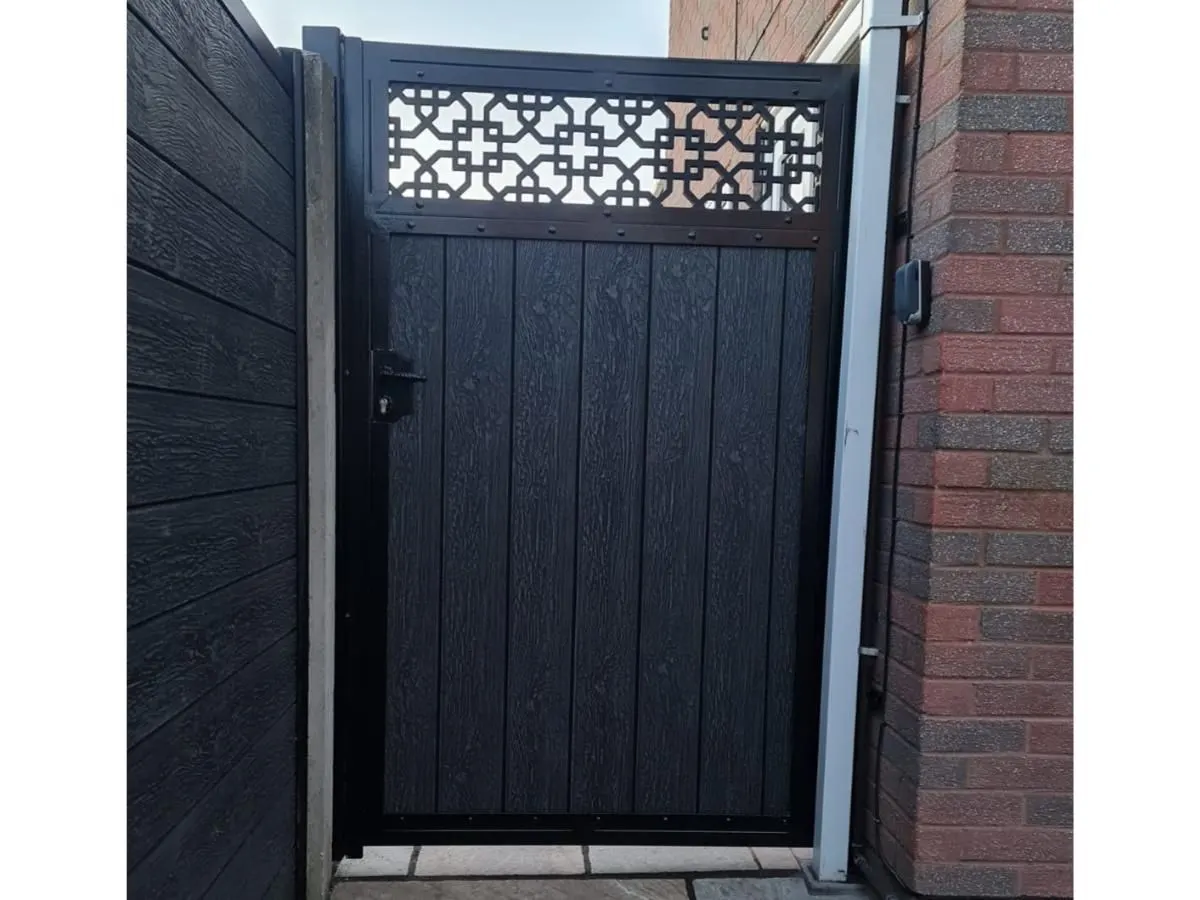
Finials sit on top of the frame — fleur-de-lis, spear and ball heads. Spikes and close-set railings are the security answer. Screens are a panel of patterned or perforated sheet set into the frame above the boards. Rings and scrollwork are formed steel and the most traditional.
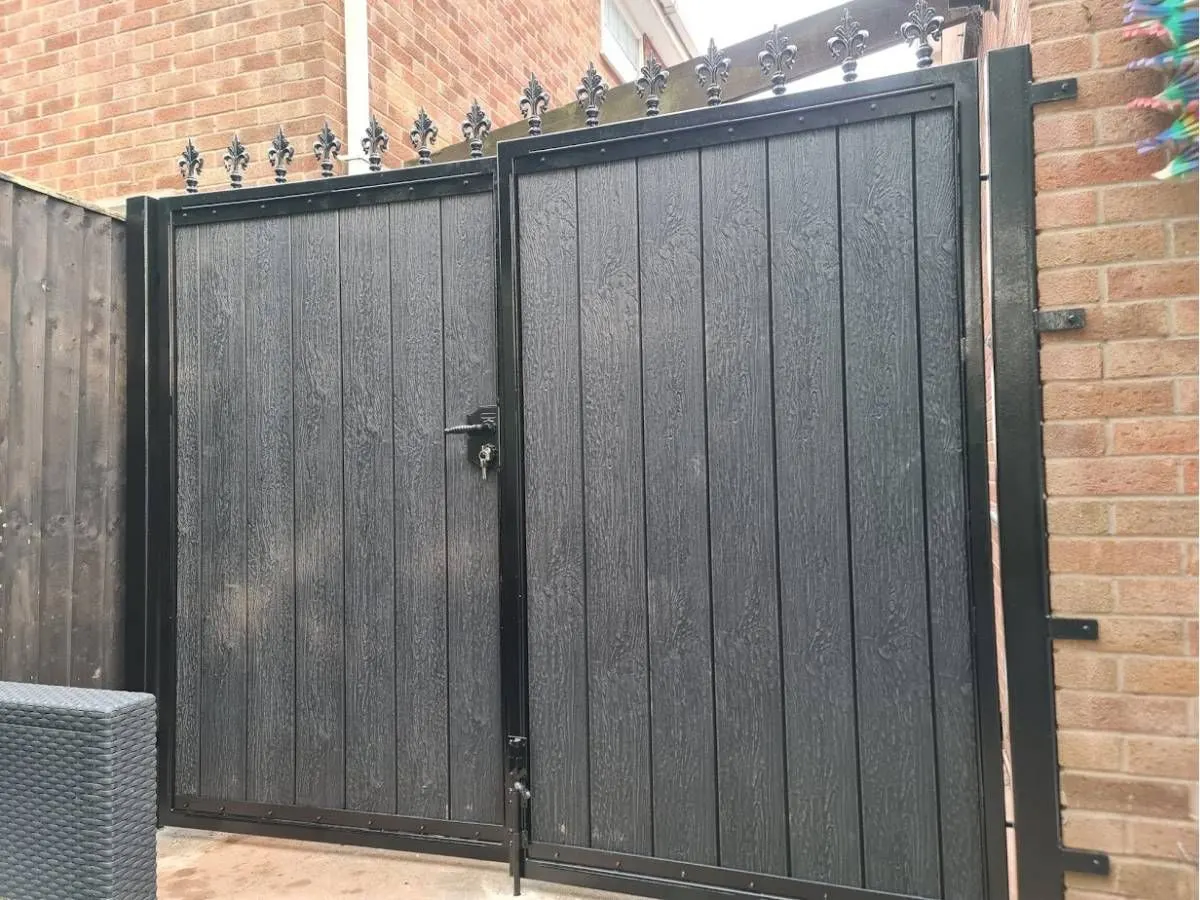
The part you touch every day, and the part that decides whether a gate is still pleasant to use in year five.
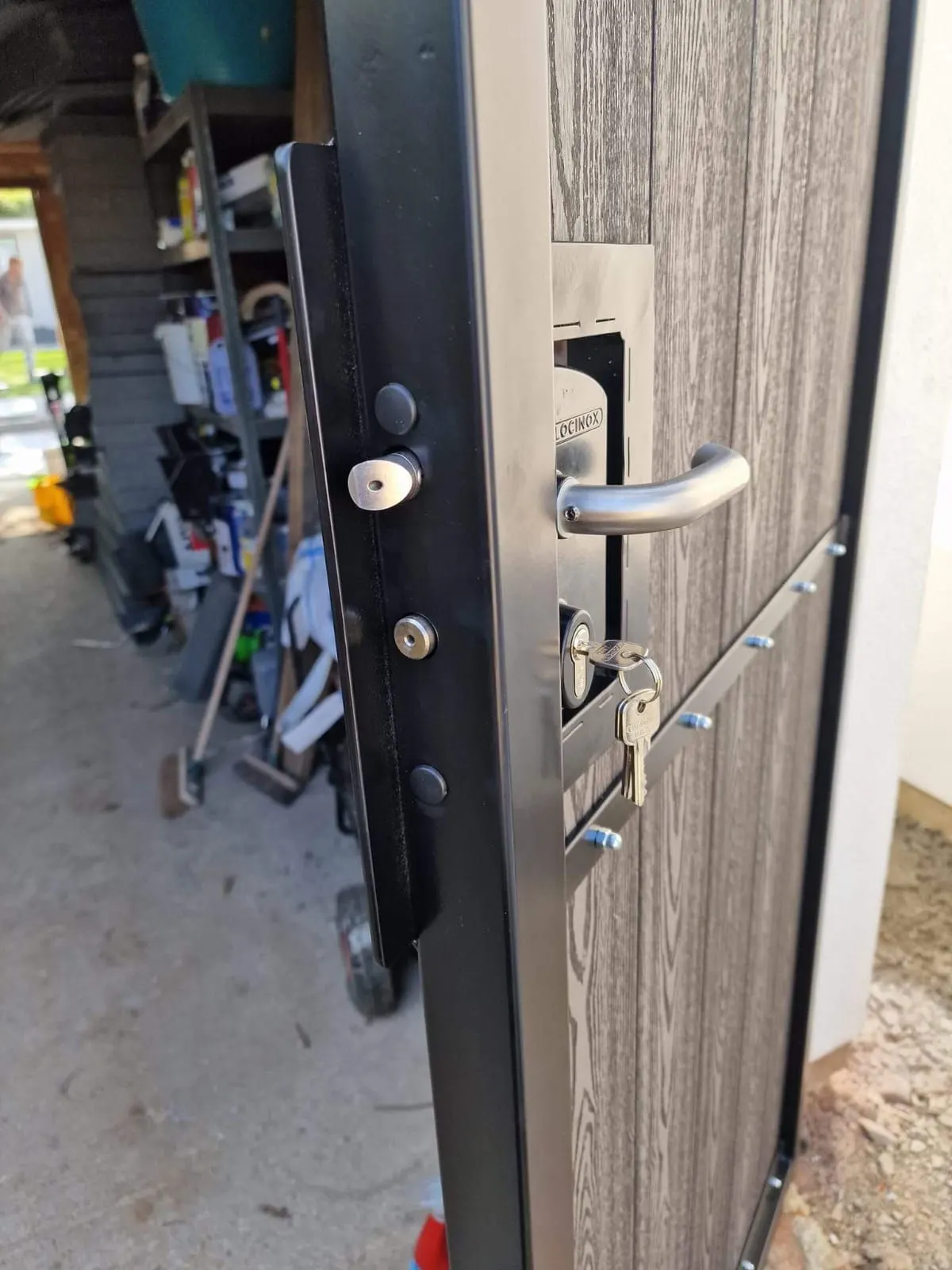
We fit weather-rated gate locks rather than door hardware — the difference matters outdoors, where a cheap mechanism seizes in its second winter. Key both sides, or key outside and thumbturn inside, depending on whether the gate is also a fire escape from a rear garden.
On a pair, one leaf is held by a drop bolt into a socket set in the ground and the other closes against it. It stops the gates rattling in wind and stops a leaf being lifted off its hinges.
All fitted into the gate rather than screwed on afterwards. A letterbox in a front pedestrian gate is common where there is no through access; a keypad suits a gate several people need to use without carrying a key.
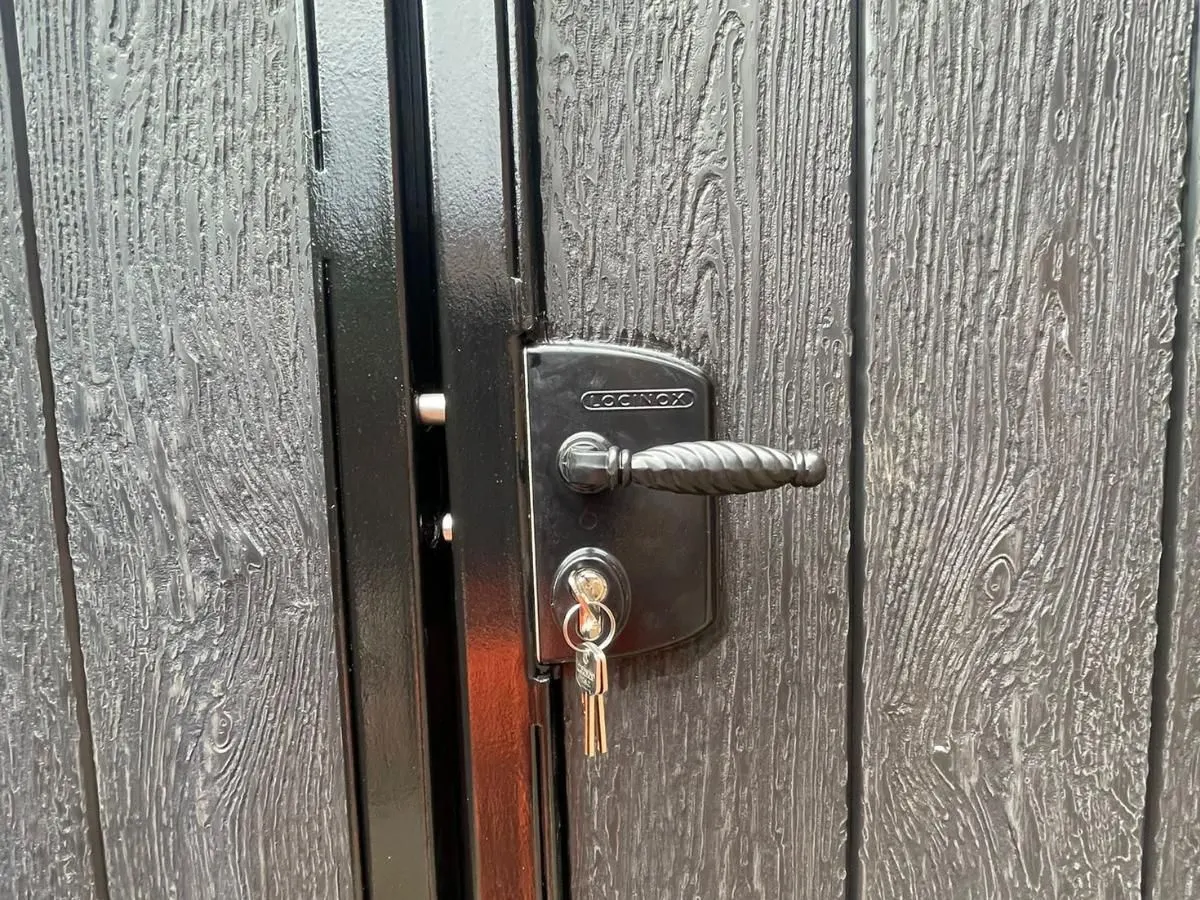
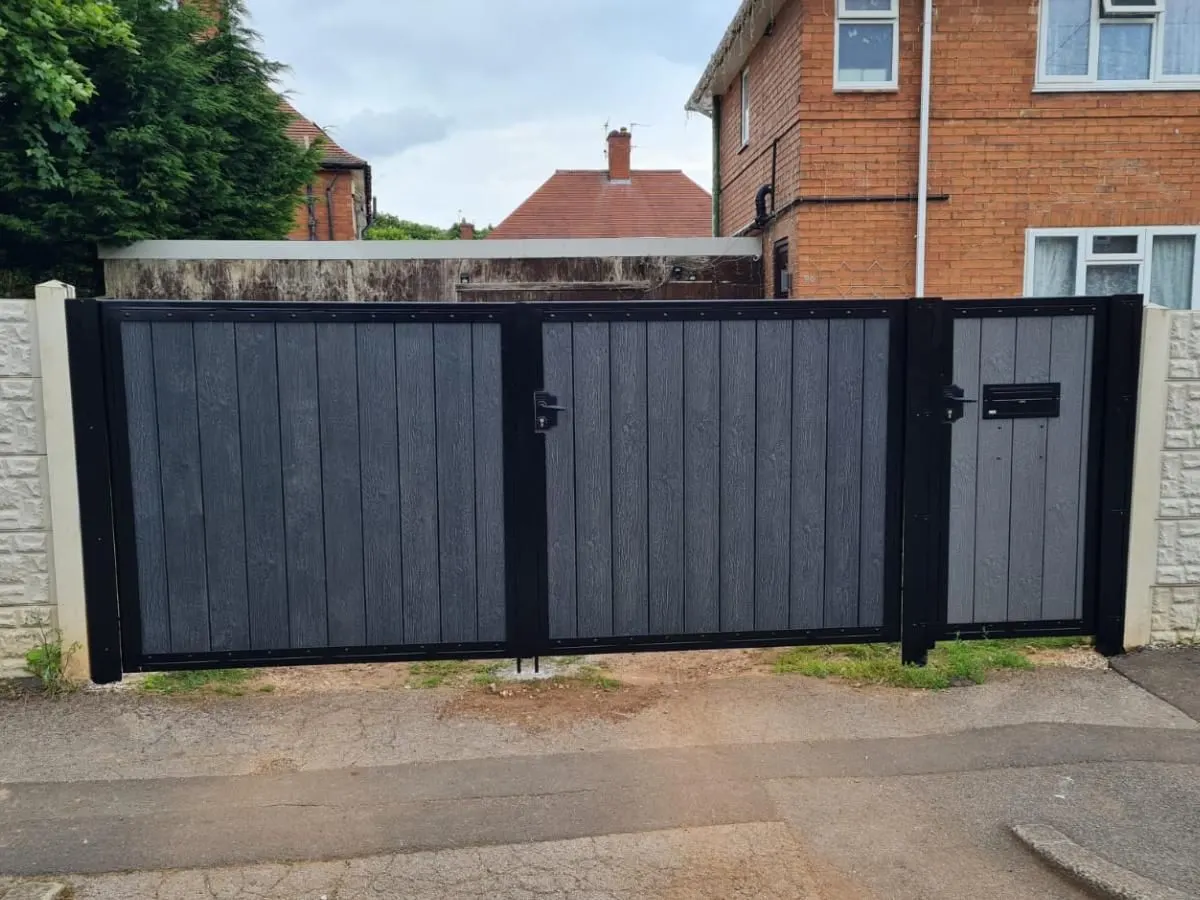
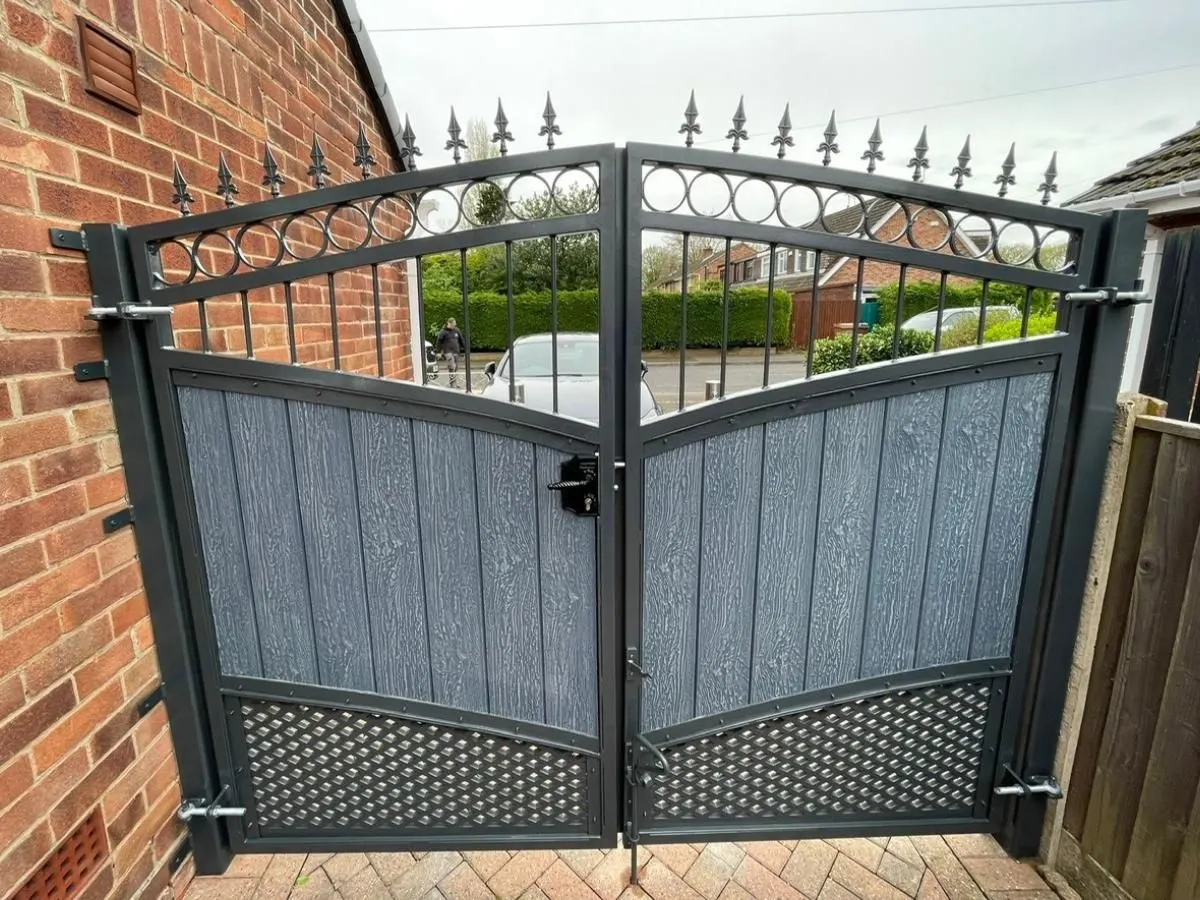
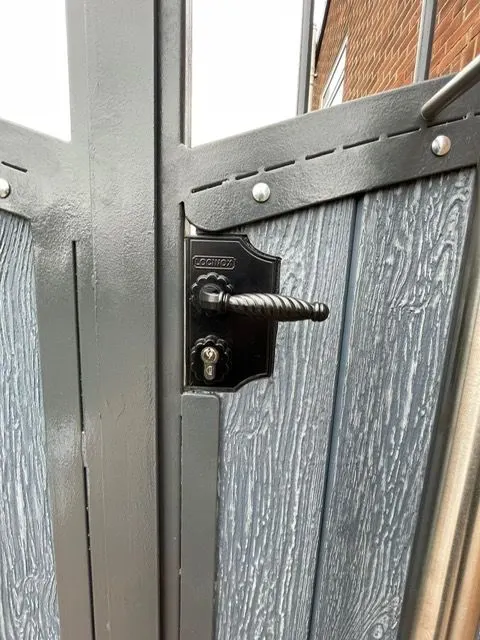
There are a lot more of these, on real jobs rather than in a brochure. See the full gallery.
Gate prices move on a handful of variables rather than a fixed rate. The main ones are:
Board colour — No difference between the six. Choose on how it looks, not on price.
Frame colour — Anthracite grey and black are standard. A specific RAL match is a small addition and worth it where it has to sit against existing railings or windows.
Shape — Flat and bow tops are much the same. A fully arched top costs more, because every board is cut to the curve and a pair has to meet exactly at the centre.
What sits above the boards — Finials are the least expensive. Spikes, screens and formed scrollwork each add frame work rather than panel work.
Ironmongery — A latch and hinges is the baseline. Locking both sides, drop bolts, letterboxes and keypads each add.
← Now pick the gate: composite driveway gates, composite garden gates or metal gates
Founded in 2023. Composite Gates UK has brought together quality British Manufacturing with personal, local services to provide a unique composite gate & composite fencing proposition that is gradually widening its reach across the UK.
Through local companies you are provide with a total composite gate and metal gates service from site survey and measurement, to fabrication and installation.
Steel frames can be galvanised or zinc primed and then powder coated finished to ensure strong, long lasting frames with a selection of composite infill panels. Almost any colour fame can be selected. Additional gate personalisation can be added with arch top finishes, finials and screens for a truley bespoke composite gate, or metal gate service.
All our local fabricators are skilled working with metal, so if a set of composite gates are outside your budget they can also build and install metal gates.
We provide the perfect one stop experience for customers looking for bespoke driveway gates, garden gates and side gates. In a number of locations we can provide electric gates too, and a supply and fit for select composite fencing across parts of the UK.
© 2026 All Rights Reserved | Composite Gates UK