Steel driveway gates, garden gates and alley gates, made to measure and fitted by the same fabricators who build the frames for our composite gates. Welded, powder coated, and built for one specific opening — including the bespoke one-offs that composite cannot do.
Free survey and written quote. No obligation, and a straight answer on whether we cover your postcode.
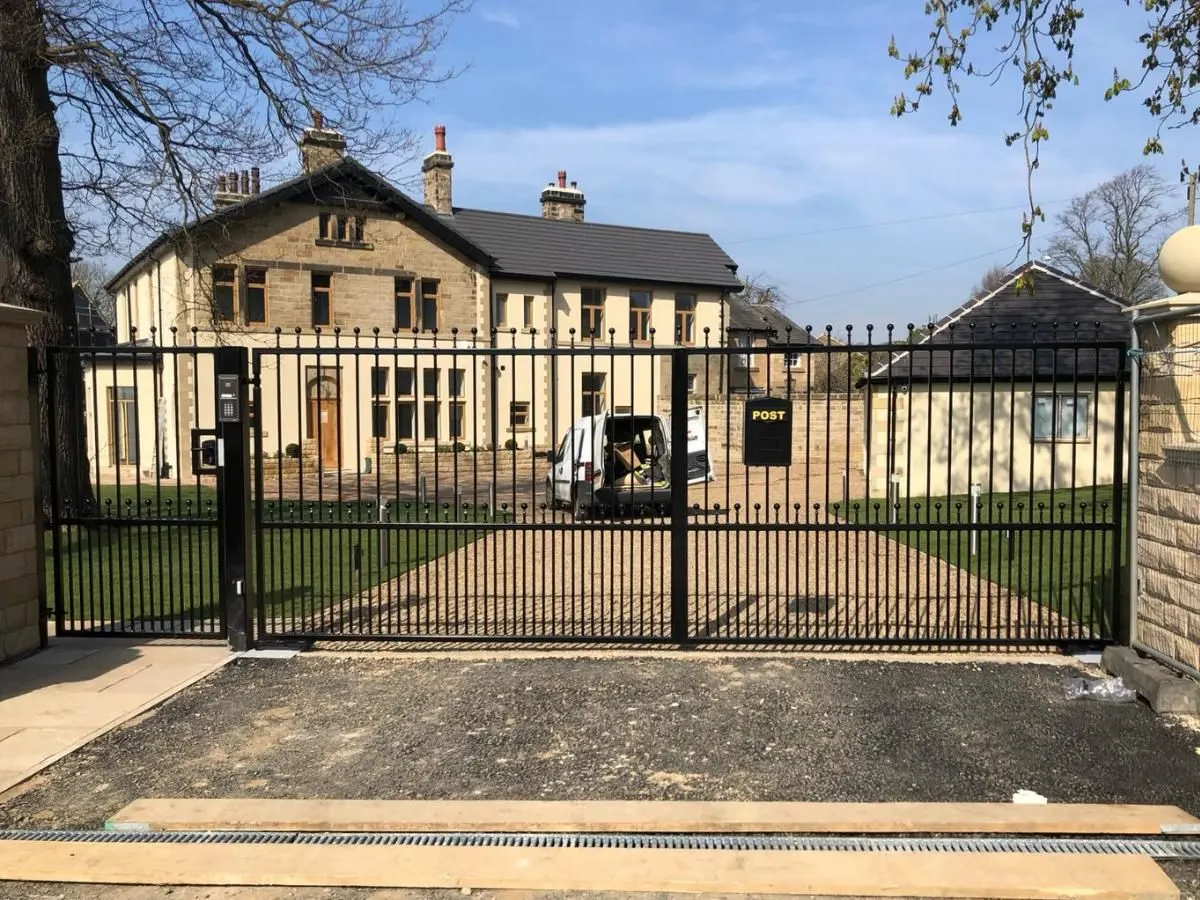
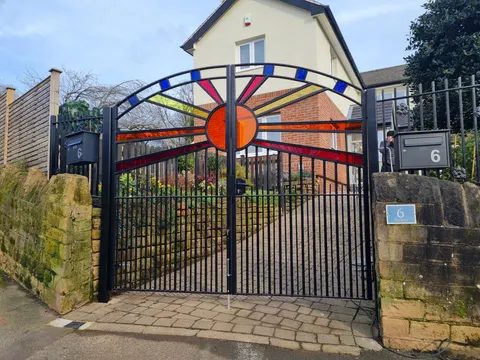
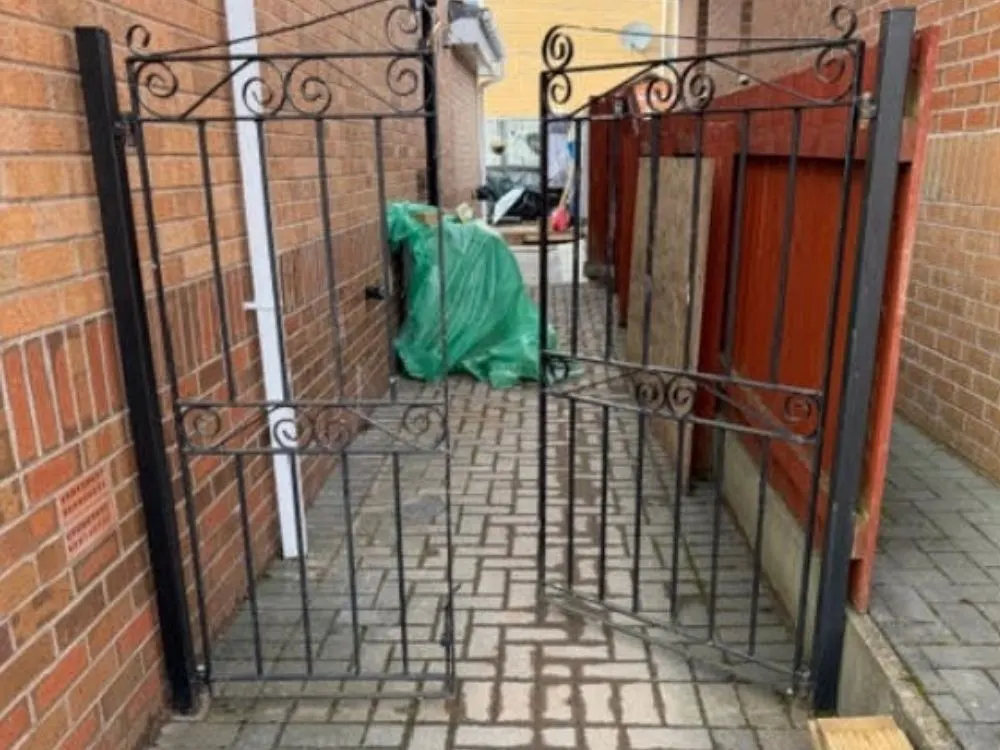
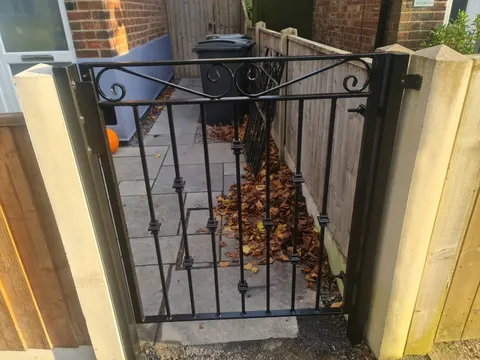
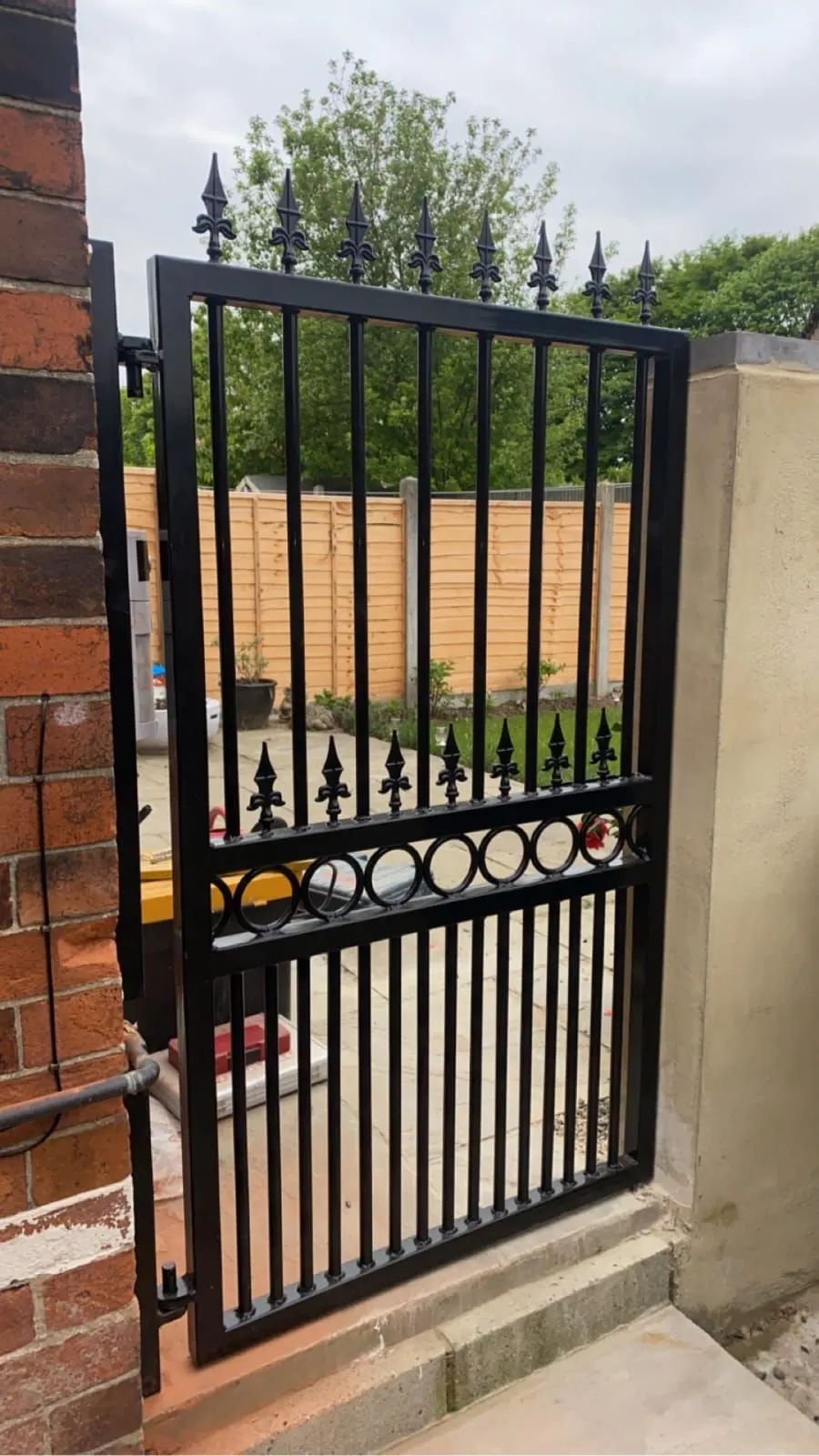
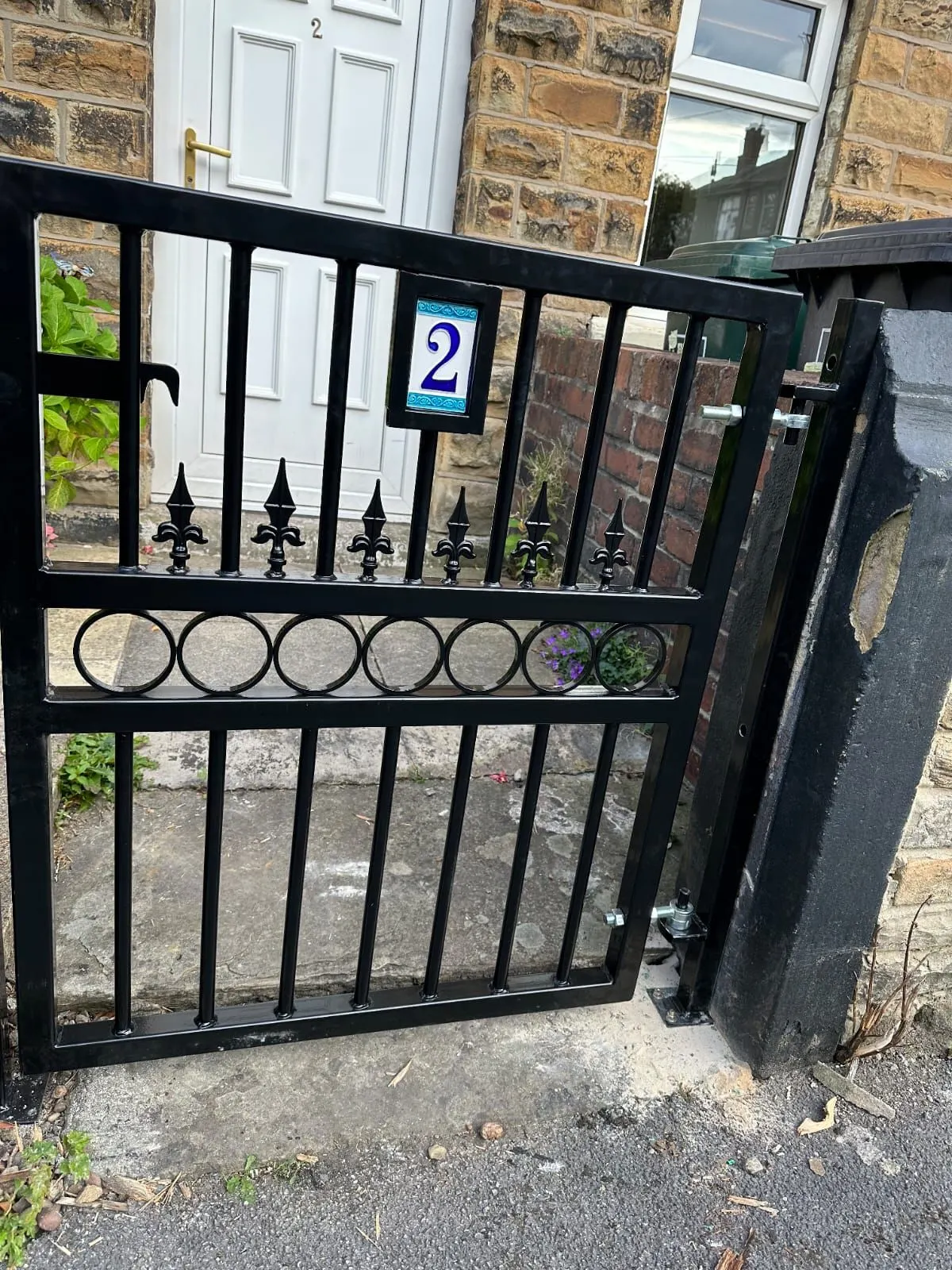
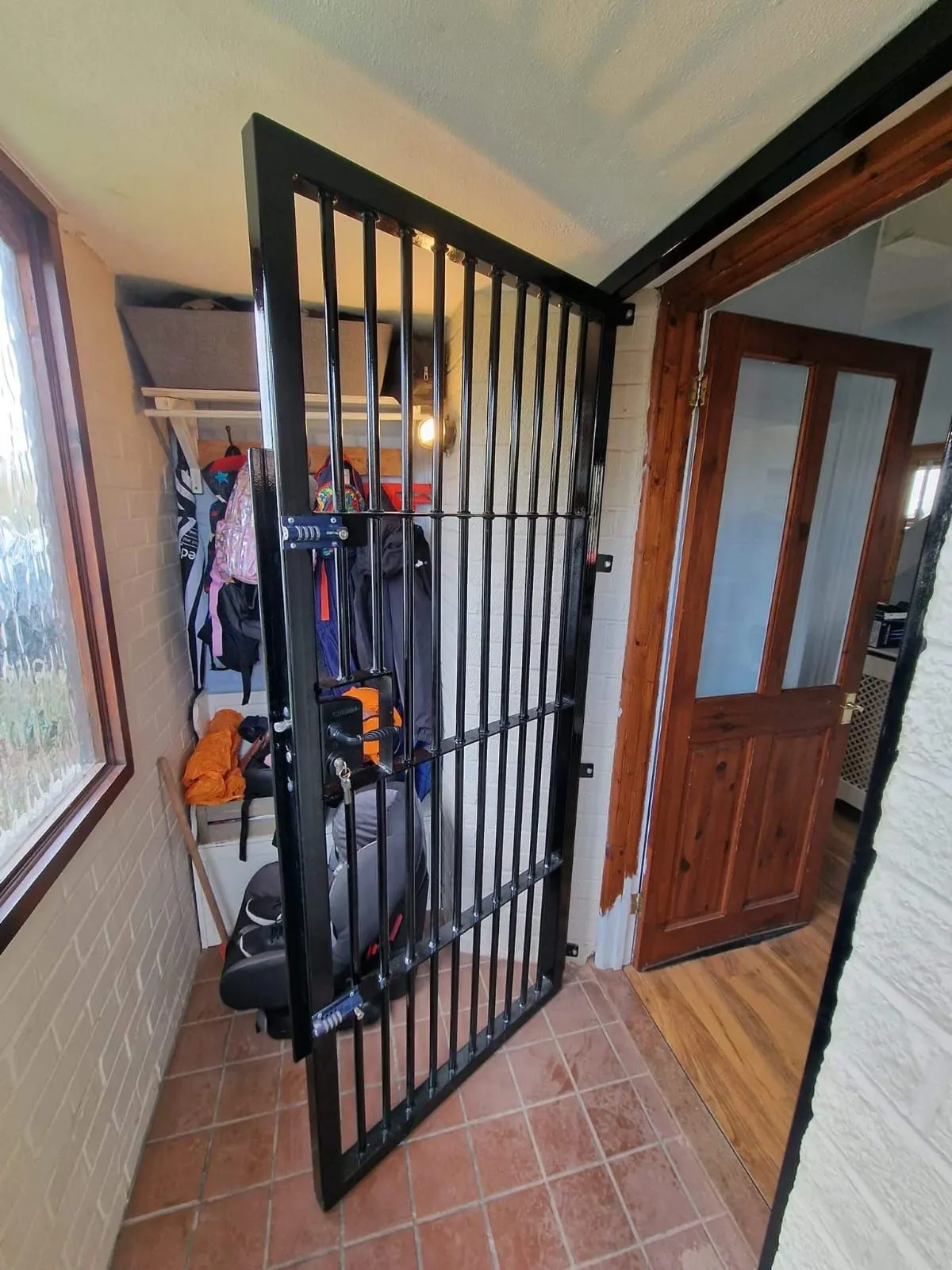
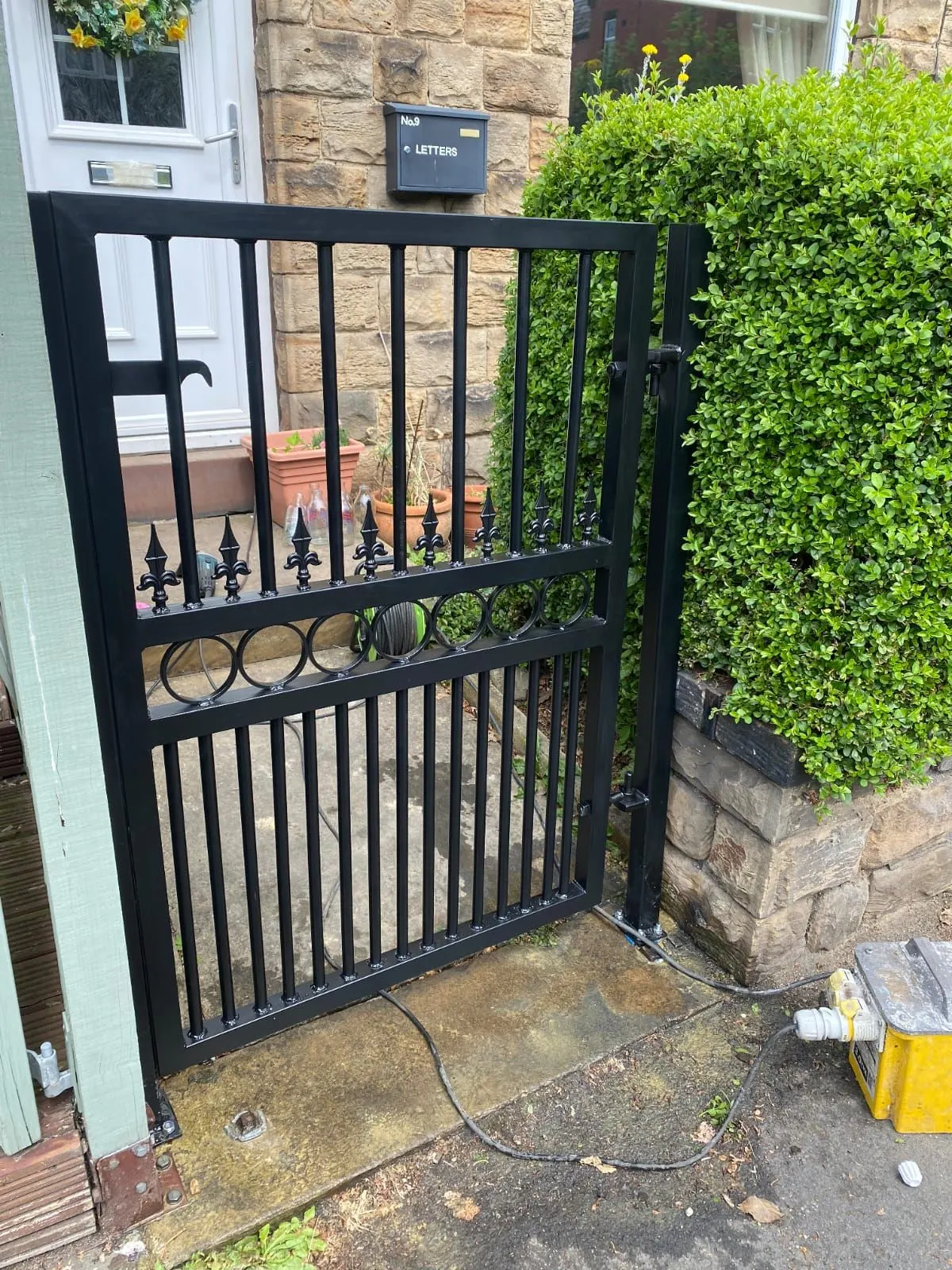
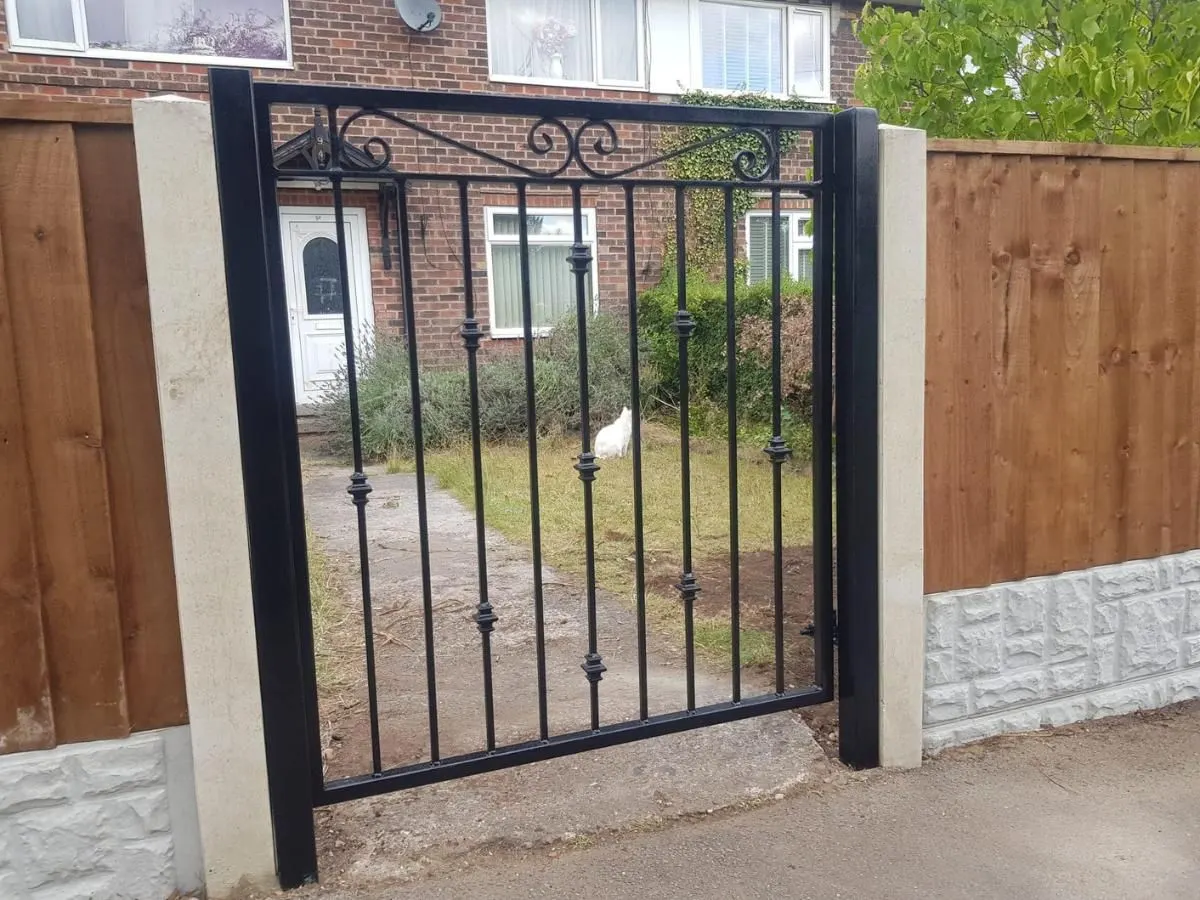
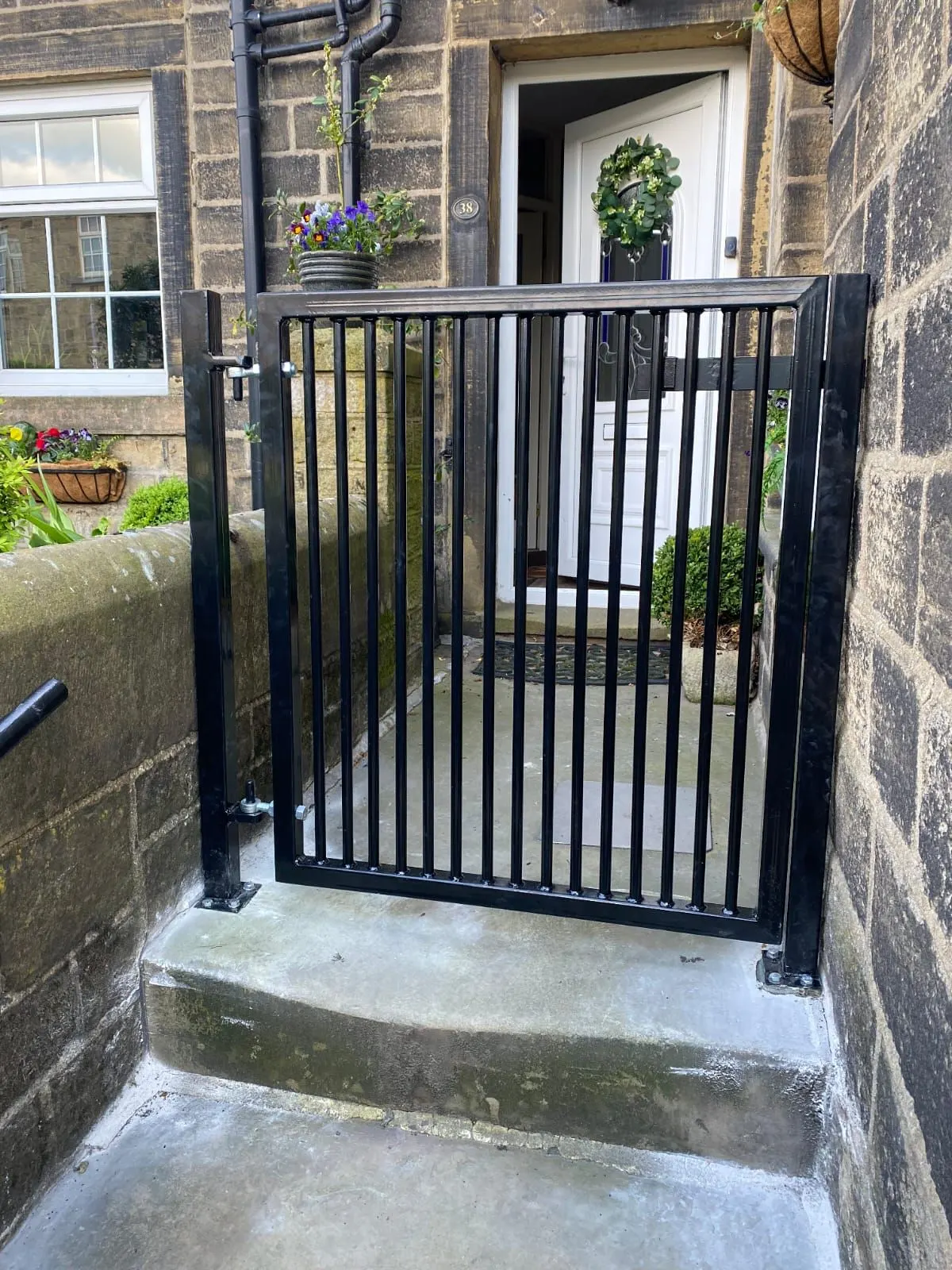
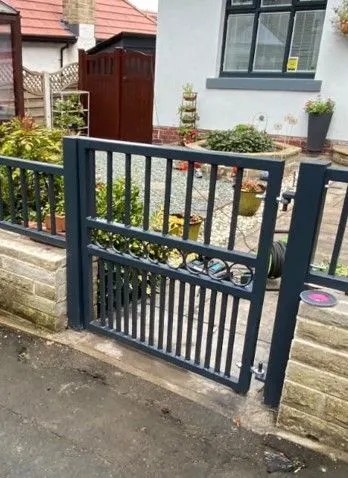
Every one of these was drawn, welded and fitted for that opening. See more of our work.
This is not a side-line bolted onto a composite business. Every composite gate we make is a welded steel frame carrying composite board, so the steelwork is the part we make either way.
Composite board has no structural job in a gate. It is infill. What carries the leaf, takes the leverage on the hinges and holds the gate square is the welded steel frame behind it. Take the board out and you have a metal gate, made in the same workshop by the people who were already making that part.
Same frame sections, same welding, same powder coating, same hinge and post decisions. If you have read what we say about composite driveway gates, nearly all of it applies here unchanged — the opening is still measured post face to post face, the ground is still rarely level, and hollow piers are still hollow.
A solid infilled gate is a sail. On an exposed frontage, a long coastal boundary or anywhere with a funnel between buildings, wind load on a solid leaf is a real force working on two hinges every day. A railed metal gate lets the wind through. That is not a style preference, it is the honest engineering answer on an exposed site, and it is the main reason we would steer someone towards metal.
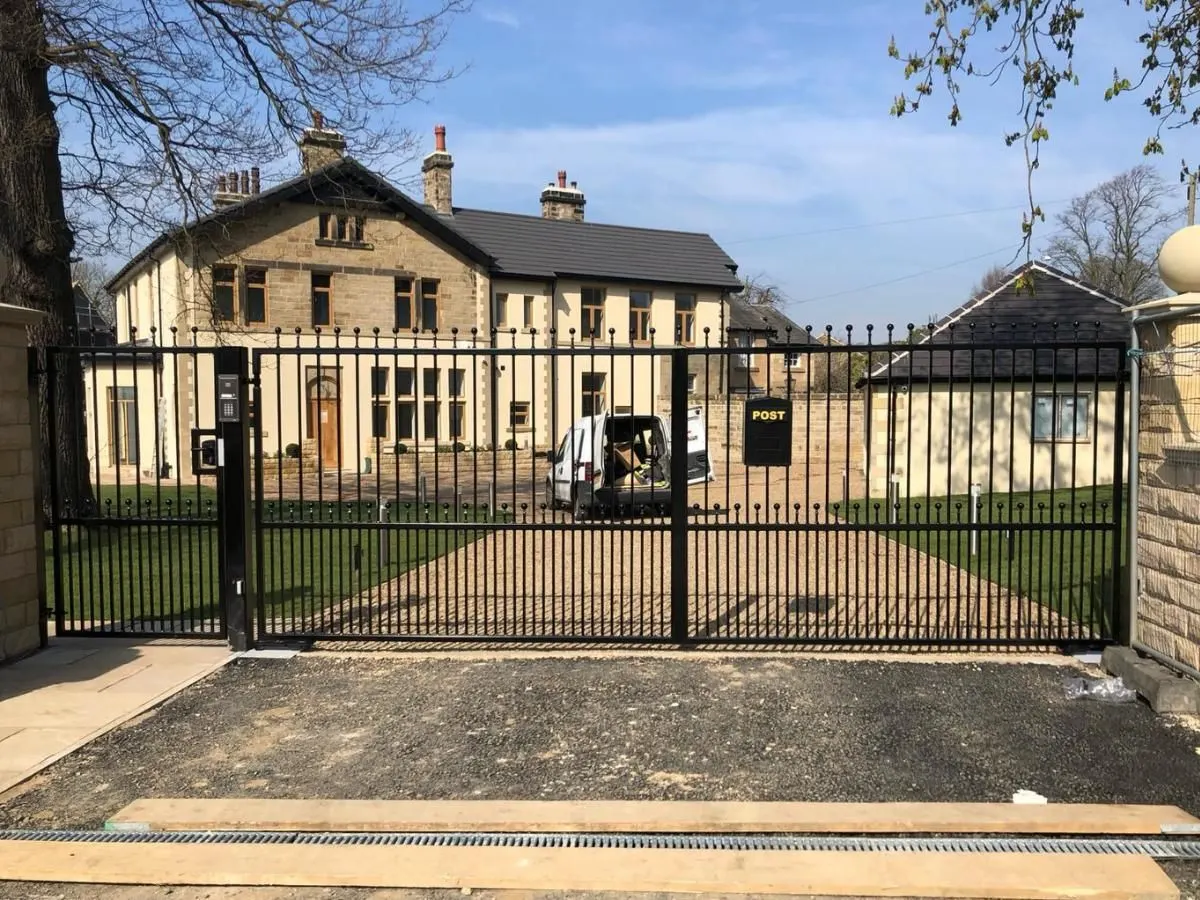
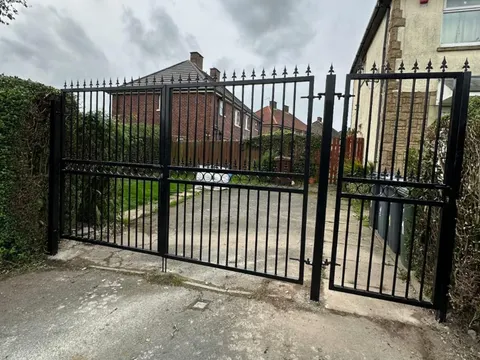
Uprights between a top and bottom rail, with or without a decorative head. Open, light, lets wind and daylight through, and shows the property behind it rather than hiding it. The usual choice where the gate is about defining and securing an entrance rather than screening it.
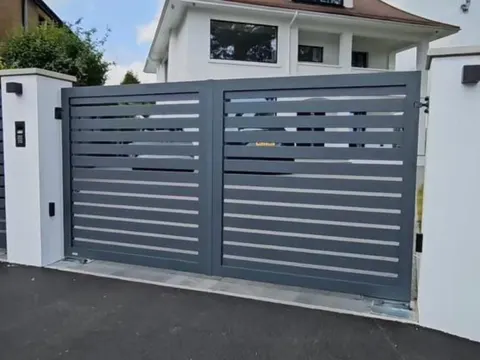
Sheet steel rather than bars, for the same privacy a composite gate gives. Heavier than composite for the same leaf, and it carries the same wind load, so posts and hinges are specified up accordingly.
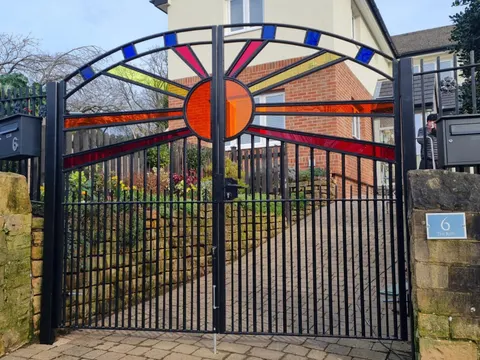
Panels set into the frame instead of bars — coloured acrylic, stained-glass effect, perforated or patterned sheet. This is the thing metal does that no other material we work with can, and it is how a gate ends up being the only one on the street.
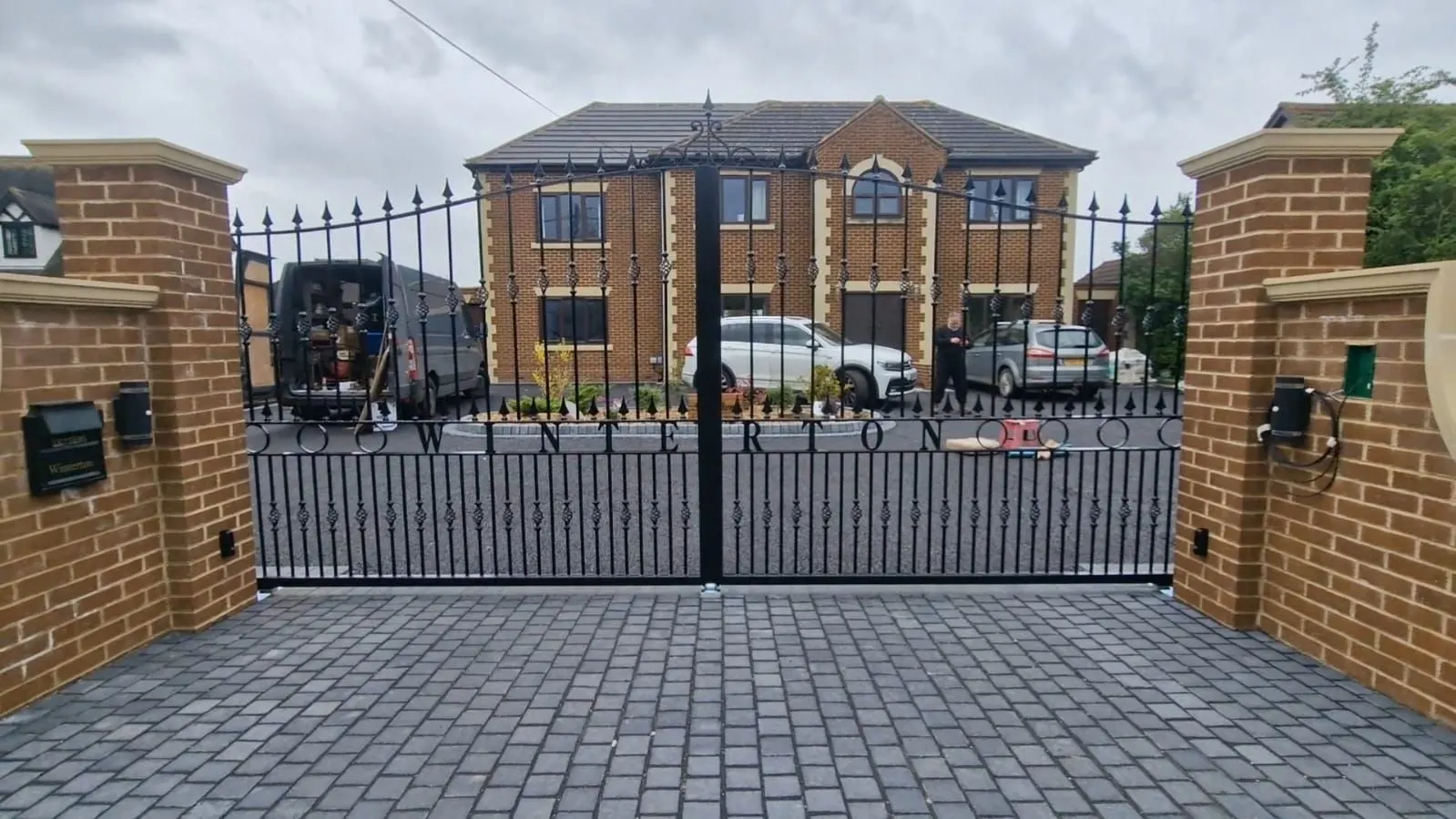
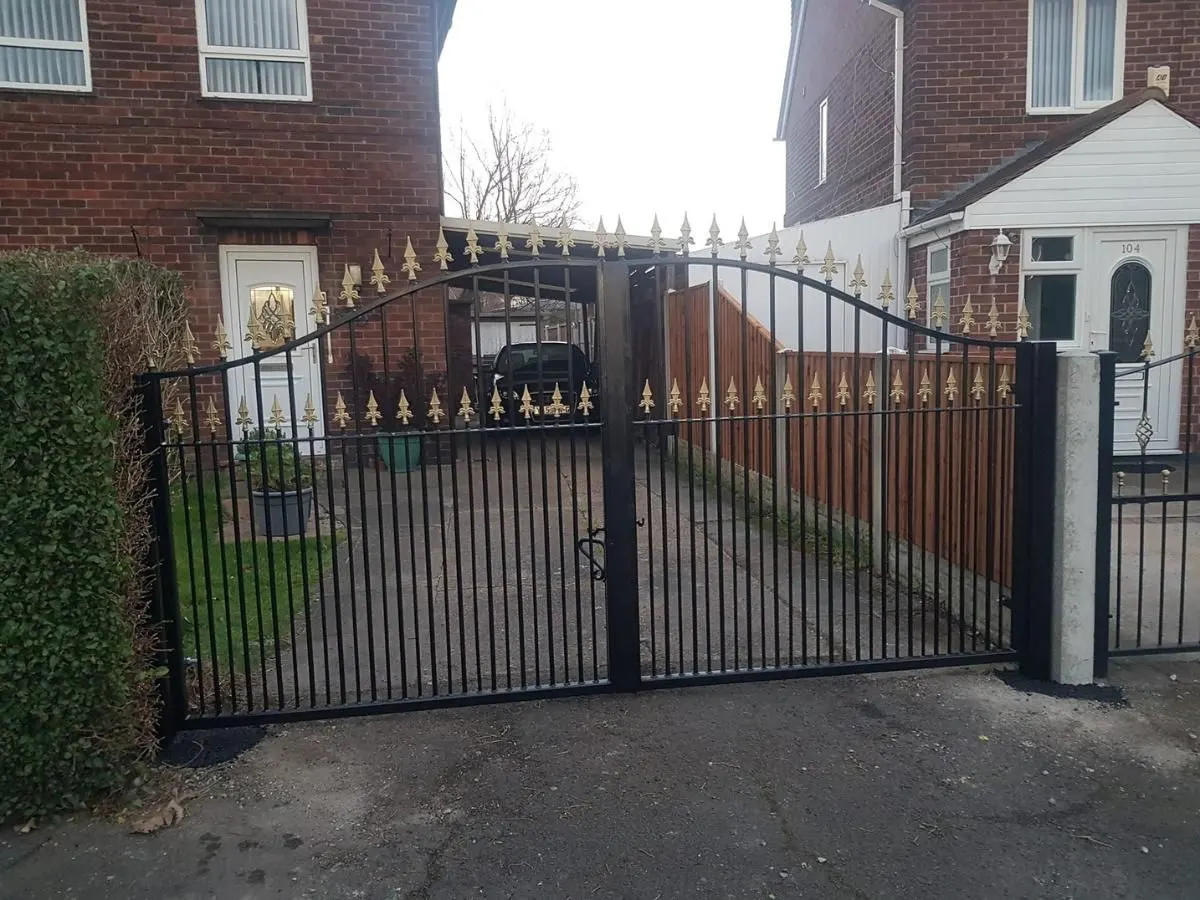
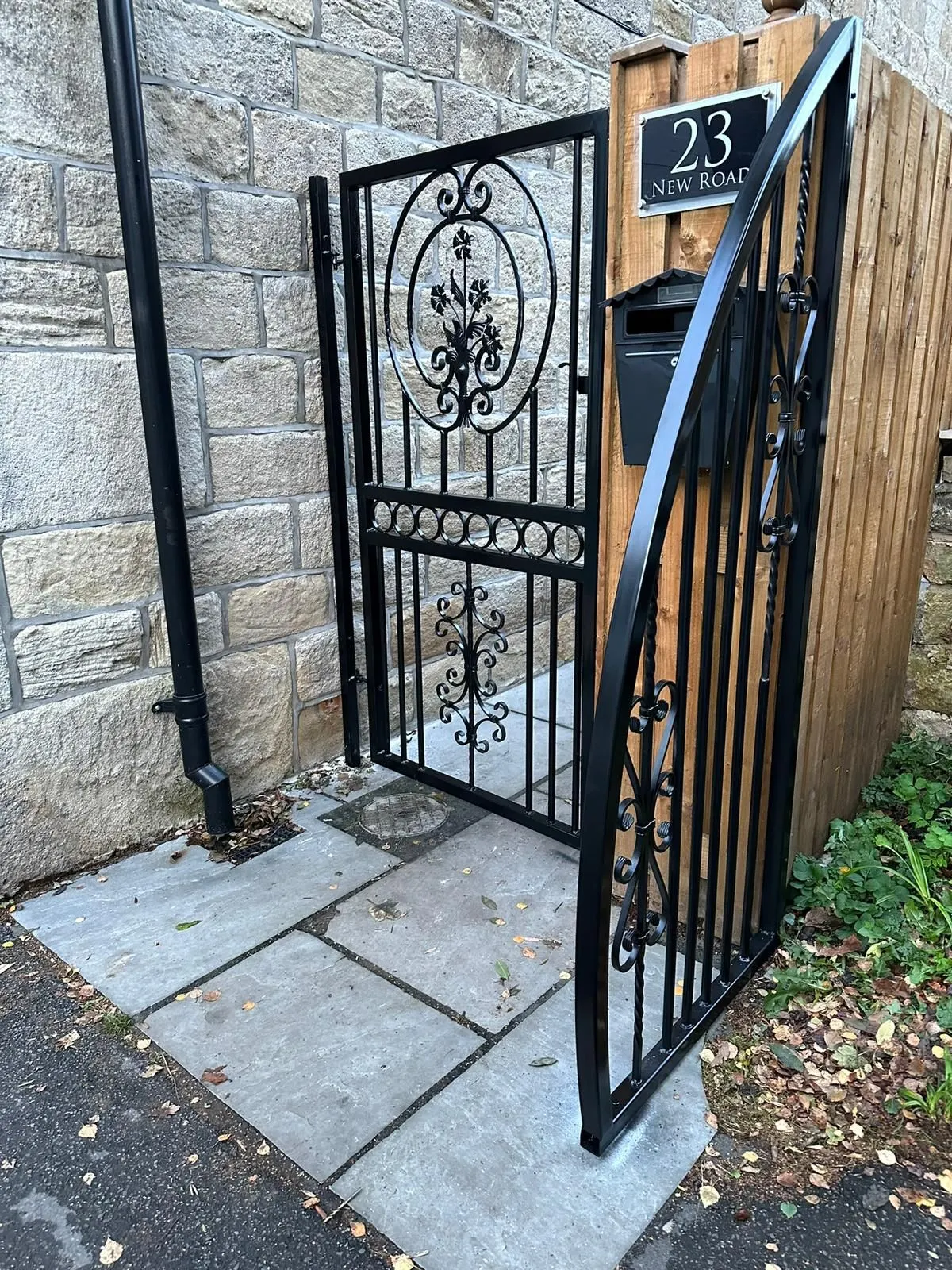
The traditional wrought-iron vocabulary, made in steel. Scrolled top rails, spear heads, circles and quatrefoils, cast finials. On a Victorian or Edwardian frontage it is usually the only thing that looks right.
Nobody asks about this until after the gate is in, and then it is expensive to change. It is worth two minutes at survey.
We work to the same maximum gap used for balustrading — a 100mm sphere should not pass through — wherever a gate is on a family property. It is good practice rather than a legal requirement on a garden gate, but it is the number that exists because of small children and it costs nothing to build to.
A gap that stops a toddler will not stop a determined terrier, and a dog that can get its head through a gap can usually get the rest through. Where a gate is there to contain a small dog we either close the bar spacing or run a mesh or solid panel to the lower third, which also stops the gate being used as a ladder.
A gate with a horizontal mid-rail is a ladder. Where security matters more than looks we leave the mid-rail out or set it low, and put the decorative work at the top where it does not give a foothold.
This is where we will tell you something that argues against the page you are reading.
Powder coating is a finish, not a barrier. Applied straight onto bare steel it looks identical on day one to a gate that was hot-dip galvanised first, and behaves completely differently in year five. On coastal sites, anywhere salt gets used on the road, or any gate we expect to outlive us, galvanise first and powder coat over it.
Almost never in the middle of a panel. It starts at cut edges, at weld seams where the coating is thinnest, at the bottom rail if it sits where water stands, and anywhere the coating has been chipped by a stone or a spade and left. Knowing those four places is most of what keeps a metal gate alive.
Wash it. Look at the bottom rail and the welds once a year. Touch in any chip before winter rather than after. It is perhaps twenty minutes a year, and skipping it for five years is what turns a repaint into a replacement.
Composite needs none of this. No painting, no touching in, nothing to rust. If the reason you are looking at metal is appearance or wind load, metal is the right answer and worth the upkeep. If it is because you assume metal lasts longer, that is worth a conversation before you order — a composite gate in a powder-coated frame will often outlast a metal one that nobody maintains.
Composite board is straight. A frame can be bow-topped or arched, but the infill has to work with it. Steel bars can follow any curve you can draw, which is why genuinely arched, radiused and scrolled gates are metal.
Cut, formed and welded into the top rail or the infill rather than screwed on afterwards. It is a small thing that makes a gate specific to one house.
A coloured acrylic sunburst, a monogram, a pattern taken from something already on the building. These are drawn, agreed and made once. If you have something in mind, send a photograph or a sketch and we will tell you honestly whether it can be made and what it would cost.
Gate prices move on a handful of variables rather than a fixed rate. The main ones are:
Bars or infill — An open railed gate uses less steel than a solid or panel-infilled one and costs less. Infill panels, particularly acrylic and patterned sheet, add material and add work.
Decorative work — Scrolls, spears, circles and formed lettering are hand work. They are the single biggest variable on a bespoke metal gate and the one most worth discussing before you commit.
Galvanising — An additional process before coating, and an additional cost. On a coastal or heavily salted site it is the cheapest thing on the quote when measured over the life of the gate.
Opening width and weight — Steel is heavier than composite for the same leaf. Wider openings mean heavier sections, larger posts and uprated hinges, so cost does not rise in a straight line with width.
What it hangs on — Sound existing piers are the cheapest outcome. New concreted posts add labour and making good. A hollow pier discovered on fitting day adds both, which is what the survey exists to prevent.
← Back to all areas we cover
Steel and metal-framed gates, made to measure and powder-coated to a colour you choose. Every town below has its own page.
Metal Gates Barnsley| Metal Gates Batley| Metal Gates Bradford| Metal Gates Castleford| Metal Gates Dewsbury| Metal Gates Doncaster| Metal Gates Garforth| Metal Gates Goole| Metal Gates Halifax| Metal Gates Harrogate| Metal Gates Holmfirth| Metal Gates Horsforth| Metal Gates Huddersfield| Metal Gates Keighley| Metal Gates Knottingley| Metal Gates Leeds| Metal Gates Pontefract| Metal Gates Rotherham| Metal Gates Sheffield| Metal Gates Skipton| Metal Gates Wakefield| Metal Gates Wetherby| Metal Gates York
Metal Gates Chesterfield| Metal Gates Corby| Metal Gates Derby| Metal Gates Kettering| Metal Gates Leicester| Metal Gates Loughborough| Metal Gates Lutterworth| Metal Gates Mansfield| Metal Gates Market Harborough| Metal Gates Melton Mowbray| Metal Gates Newark-on-Trent| Metal Gates Northampton| Metal Gates Nottingham| Metal Gates Swadlincote| Metal Gates Wellingborough| Metal Gates Worksop
Metal Gates Birmingham| Metal Gates Bromsgrove| Metal Gates Coventry| Metal Gates Droitwich Spa| Metal Gates Dudley| Metal Gates Hereford| Metal Gates Kidderminster| Metal Gates Redditch| Metal Gates Stourbridge| Metal Gates Stourport| Metal Gates Sutton Coldfield| Metal Gates Walsall| Metal Gates West Bromwich| Metal Gates Wolverhampton| Metal Gates Worcester
Metal Gates Battersea| Metal Gates Beckenham| Metal Gates Bermondsey| Metal Gates Brentford| Metal Gates Brixton| Metal Gates Bromley| Metal Gates Chelsea| Metal Gates Croydon| Metal Gates Deptford| Metal Gates Ealing| Metal Gates Enfield| Metal Gates Fulham| Metal Gates Greenwich| Metal Gates Hounslow| Metal Gates Kingston upon Thames| Metal Gates Mitcham| Metal Gates Northwood| Metal Gates Orpington| Metal Gates Peckham| Metal Gates Putney| Metal Gates Richmond| Metal Gates Rotherhithe| Metal Gates South London| Metal Gates Streatham| Metal Gates Sutton| Metal Gates Teddington| Metal Gates Twickenham| Metal Gates Uxbridge| Metal Gates Walworth| Metal Gates Wandsworth| Metal Gates Wembley| Metal Gates Wimbledon| Metal Gates Woolwich
Metal Gates Banstead| Metal Gates Caterham| Metal Gates Chertsey| Metal Gates Dorking| Metal Gates Epsom| Metal Gates Guildford| Metal Gates Horley| Metal Gates Leatherhead| Metal Gates Oxted| Metal Gates Redhill| Metal Gates Reigate| Metal Gates Sunbury-on-Thames| Metal Gates Tadworth| Metal Gates Walton-on-Thames| Metal Gates Woking
Metal Gates Brighton| Metal Gates Chichester| Metal Gates Crawley| Metal Gates East Grinstead| Metal Gates Henfield| Metal Gates Horsham| Metal Gates Hove| Metal Gates Littlehampton| Metal Gates Portslade| Metal Gates Royal Tunbridge Wells| Metal Gates Sevenoaks| Metal Gates Shoreham-by-Sea| Metal Gates Southwick| Metal Gates Steyning| Metal Gates Storrington| Metal Gates Uckfield| Metal Gates Worthing
Metal Gates Bodmin| Metal Gates Camborne| Metal Gates Dartmouth| Metal Gates Exeter| Metal Gates Falmouth| Metal Gates Launceston| Metal Gates Newquay| Metal Gates Paignton| Metal Gates Penzance| Metal Gates Plymouth| Metal Gates St Austell| Metal Gates St Ives| Metal Gates Tavistock| Metal Gates Torquay| Metal Gates Truro
Metal Gates Abergavenny| Metal Gates Barry| Metal Gates Blackwood| Metal Gates Bridgend| Metal Gates Caerphilly| Metal Gates Cardiff| Metal Gates Cwmbran| Metal Gates Llantwit Major| Metal Gates Merthyr Tydfil| Metal Gates Newport| Metal Gates Penarth| Metal Gates Pontypool| Metal Gates Pontypridd| Metal Gates Port Talbot| Metal Gates Swansea
Not listed? Send us your postcode and we will confirm whether we can cover you — either way, you will get a straight answer. See all areas we cover.


Founded in 2023. Composite Gates UK has brought together quality British Manufacturing with personal, local services to provide a unique composite gate & composite fencing proposition that is gradually widening its reach across the UK.
Through local companies you are provide with a total composite gate and metal gates service from site survey and measurement, to fabrication and installation.
Steel frames can be galvanised or zinc primed and then powder coated finished to ensure strong, long lasting frames with a selection of composite infill panels. Almost any colour fame can be selected. Additional gate personalisation can be added with arch top finishes, finials and screens for a truley bespoke composite gate, or metal gate service.
All our local fabricators are skilled working with metal, so if a set of composite gates are outside your budget they can also build and install metal gates.
We provide the perfect one stop experience for customers looking for bespoke driveway gates, garden gates and side gates. In a number of locations we can provide electric gates too, and a supply and fit for select composite fencing across parts of the UK.
© 2026 All Rights Reserved | Composite Gates UK