
Automated driveway gates, and — more often — gates built so they can be automated whenever you are ready. The motors are the straightforward part. What decides the cost, and whether automation is worth doing at all, is the groundwork underneath and the gate itself.
Free survey and written quote. No obligation, and a straight answer on whether we cover your postcode.
Worth knowing before you ask anyone for a price, because the quote that comes back is usually bigger than people expect and the reason is rarely the motors.
A pair of swing arms or an underground kit is a modest share of the job. Most of the cost is everything around them: getting power to the gate, the control gear, the safety equipment, and the groundwork to put it all in without leaving a trench across a finished drive.
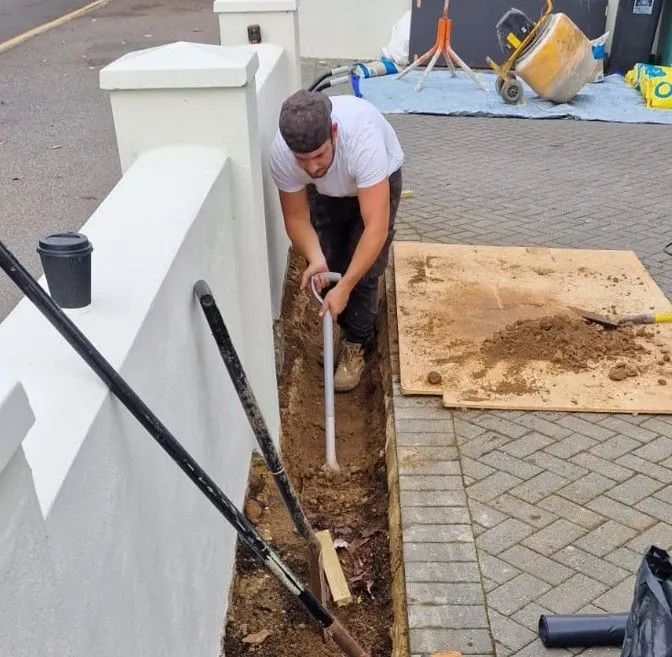
An armoured supply run from the house or the consumer unit to the gate posts, which on most properties means lifting and reinstating part of the drive. This single item is usually the difference between a quote someone expects and the one they get. It is also the one thing that gets dramatically cheaper if the ducting goes in when the drive is already up.
Not a gate with a motor on it. That means safety edges, photocells, force testing and documentation, and it is the reason a proper installation costs what it does. It is also why we will not simply bolt a kit onto an existing gate and walk away.
The gate, the posts and the groundwork are ours. Several fabricators on our network offer automation alongside it, working with a qualified electrician for the supply and the connection. Where that is the case in your area we will say so at survey — and where it is not, we will tell you that too rather than quietly subcontracting it.
A good number of people who search for electric gates do not end up automating on day one. That is not a failed enquiry — it is usually the right decision, and it only works if the gate is built for it from the start.
Made to the weight and specification a motor needs, hung on posts sized for the load, with ducting run under the drive while the drive is open and a drop bolt and slam plate positioned so they will not foul a motor later. It works perfectly well by hand and stays a straightforward job for an installer whenever you decide.
Ducting. Putting a conduit under a drive before it is made good costs very little. Getting a cable under a finished block-paved drive two years later means taking it up and relaying it, and that one item can cost more than the motors. If there is any chance you will automate, this is the decision to get right now.
If the budget does not stretch to full automation this year, the alternative is not a cheaper motor — it is a better gate now and motors later. A gate that was never built for it has to be replaced or reworked before it can be automated at all, which is the expensive version of the same conversation.
Then the survey covers the same ground either way: where the power comes from, what the ground will allow, whether the drive suits swing or sliding, and what the safety equipment has to do. The gate specification does not change. Only the timing does.
Automation narrows the choice more than a manual gate does, because a motor needs a predictable path and level ground to work against.
The default, and the cheapest to automate. They need a flat, clear run the depth of each leaf. If the drive rises away from the road the gate grounds before it is fully open, and a motor will keep pushing against it — which is how automated swing gates on sloping drives fail.
Runs parallel to the boundary on a ground track. It needs a clear run alongside at least as long as the gate, and the track has to stay clear — a sliding gate stops working the moment the track fills with gravel or leaves. It suits drives with no room to swing and drives that slope up from the road.
Carried on a counterbalance rather than a ground track, so nothing crosses the opening. More expensive and it needs a longer run alongside, but it is the answer on uneven or sloping ground where a track would never sit true, and on drives that have to stay clear for drainage.
Handsets are the default. A keypad suits a gate several people use without carrying anything. An intercom lets you see who is there before opening. All of it is decided at the same survey, and all of it wants the ducting sorted first.
And anyone who does is guessing at the groundwork. The gate itself is the predictable part; the run from the power source, the ground it crosses and what has to be reinstated afterwards are not. That is why the survey is free and why the quote is written rather than given over the phone.
Automation typically adds meaningfully more to a job than most people assume, and the gap between automating at build time and retrofitting later is larger still. We would rather set that expectation at the first conversation than at the quote.
Gate prices move on a handful of variables rather than a fixed rate. The main ones are:
Distance from the power source — The single biggest variable. A gate ten metres from a consumer unit and one at the far end of a long drive are different jobs entirely.
What the cable has to cross — Soft ground is straightforward. A finished block-paved or resin drive means lifting and reinstating, and reinstatement is often the larger half of that line.
Swing, sliding or cantilever — Swing is the least expensive to automate. Sliding needs a track and groundwork. Cantilever needs the most engineering.
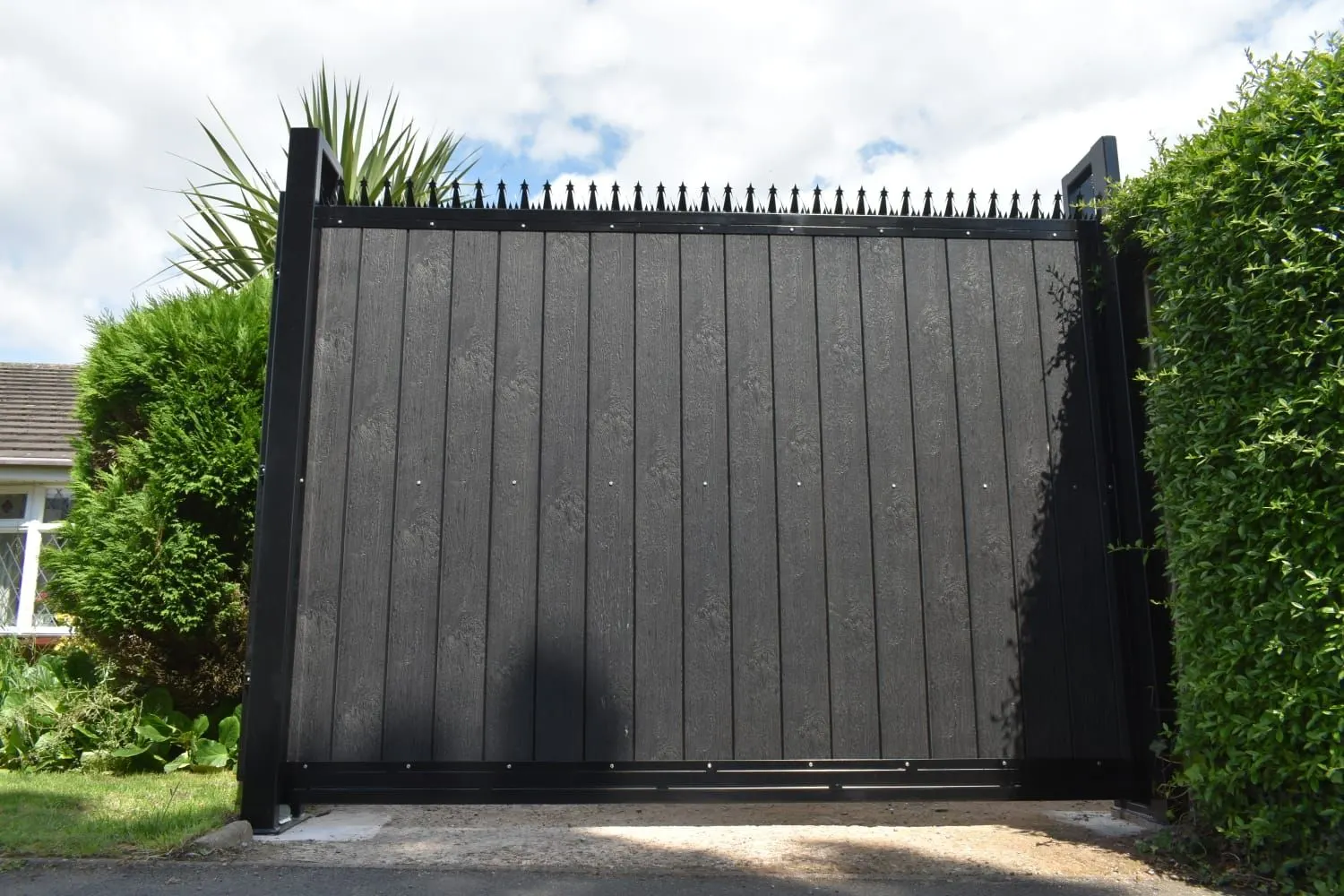
Gate weight and width — Motors are rated by leaf weight and width. A wide pair of infilled composite gates needs more motor and heavier posts than a narrow railed pair.
Safety equipment and testing — Photocells, safety edges and force testing are not optional extras and are priced in rather than offered as an upgrade.
Automation-ready instead — Ducting and uprated posts at build time are a small addition to a gate you were buying anyway — and the cheapest automation decision available.
← Back to composite driveway gates and metal gates
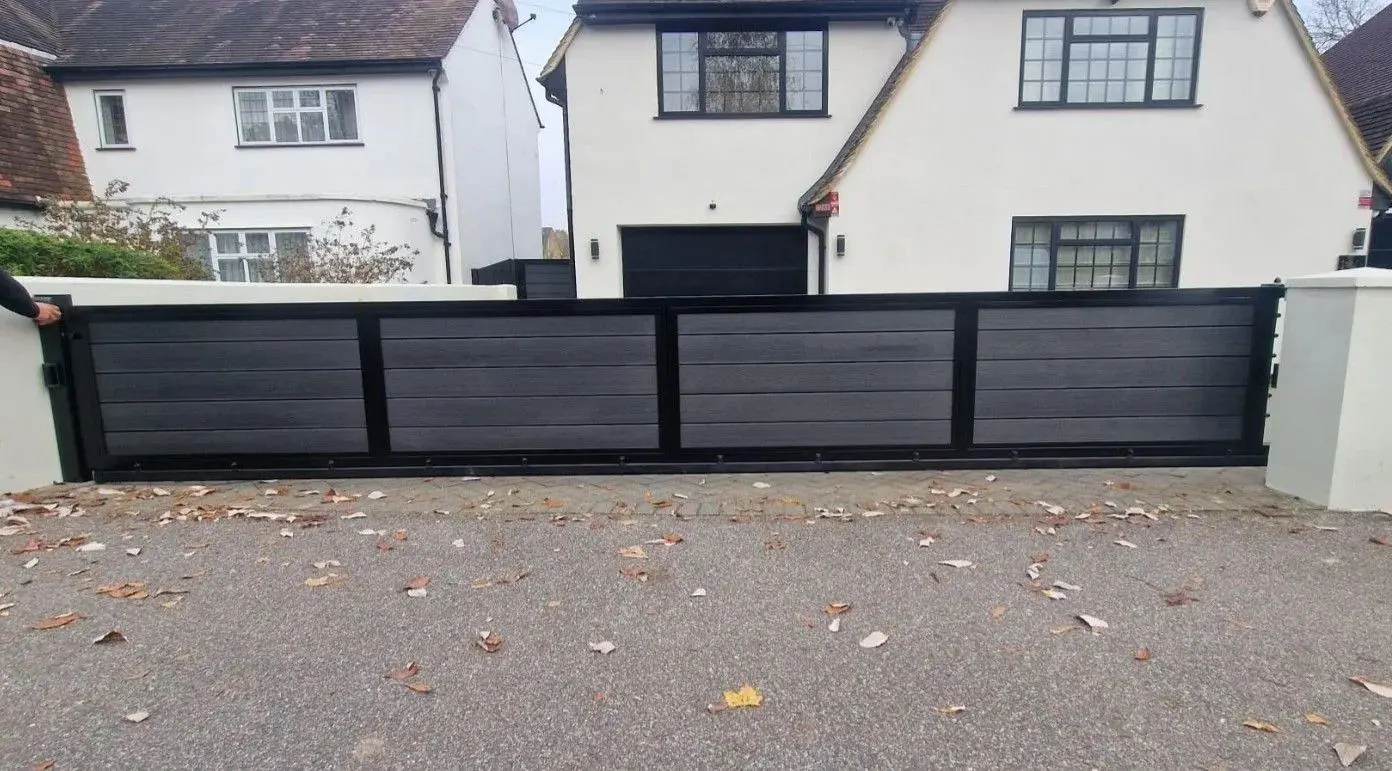
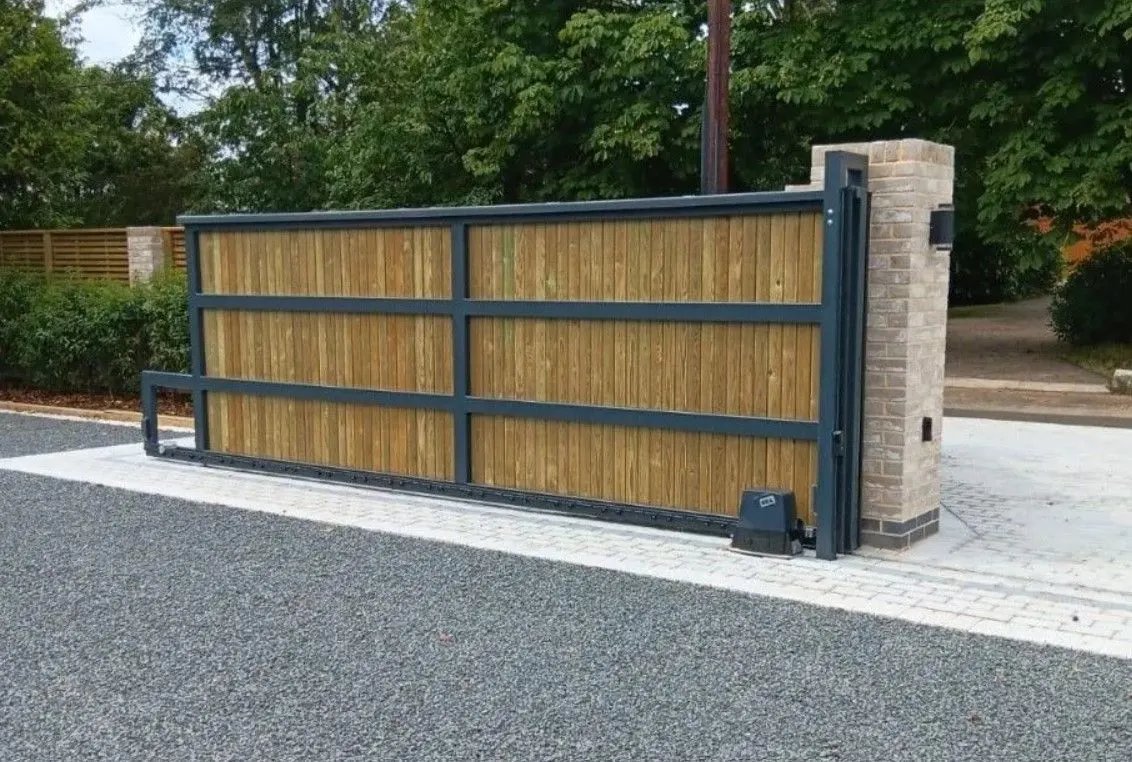
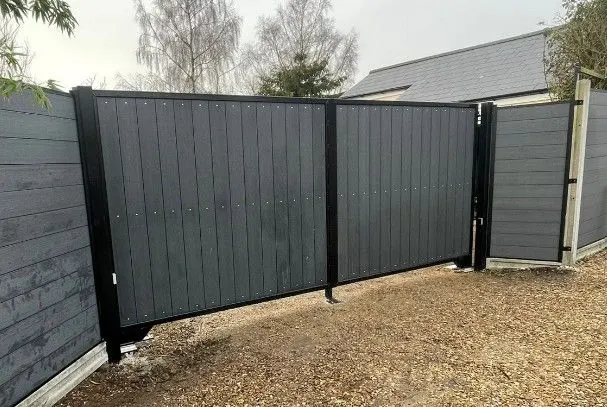
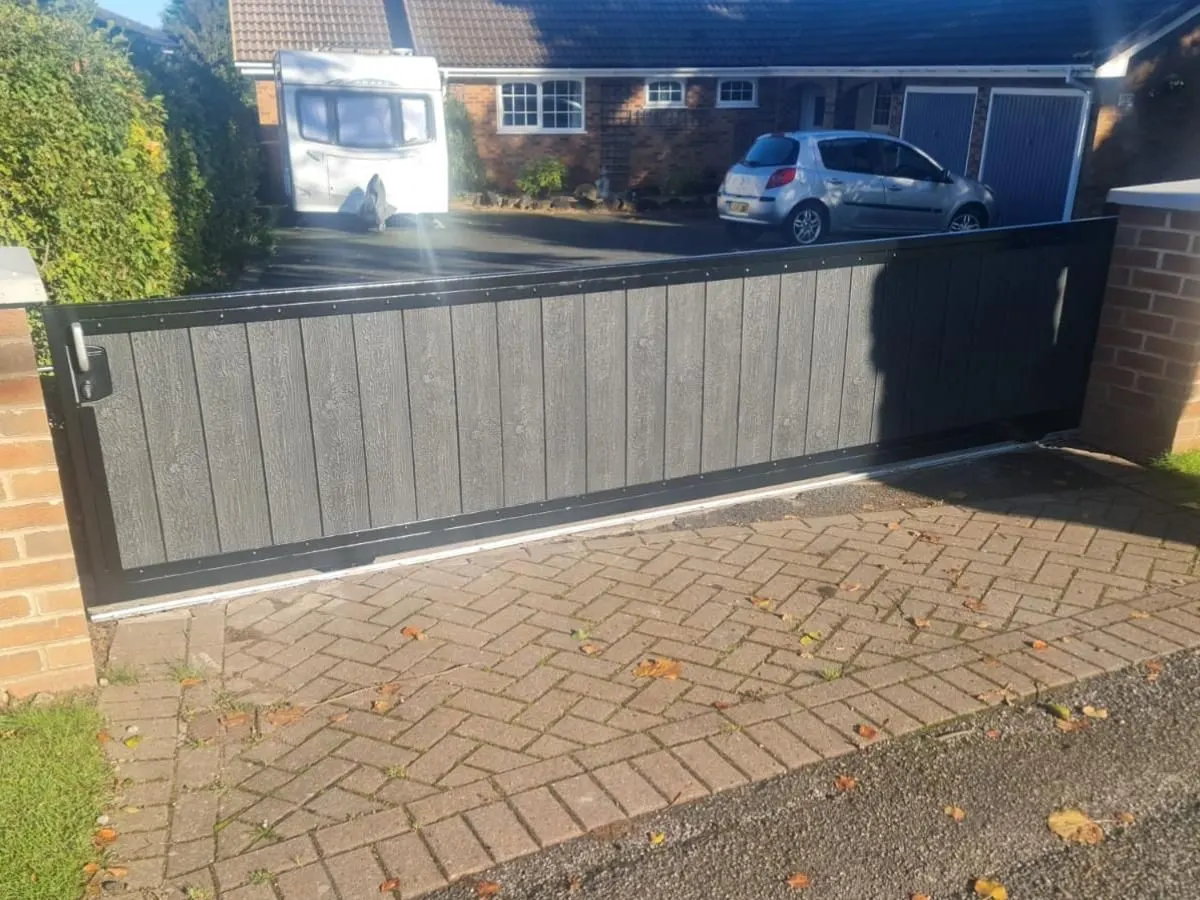
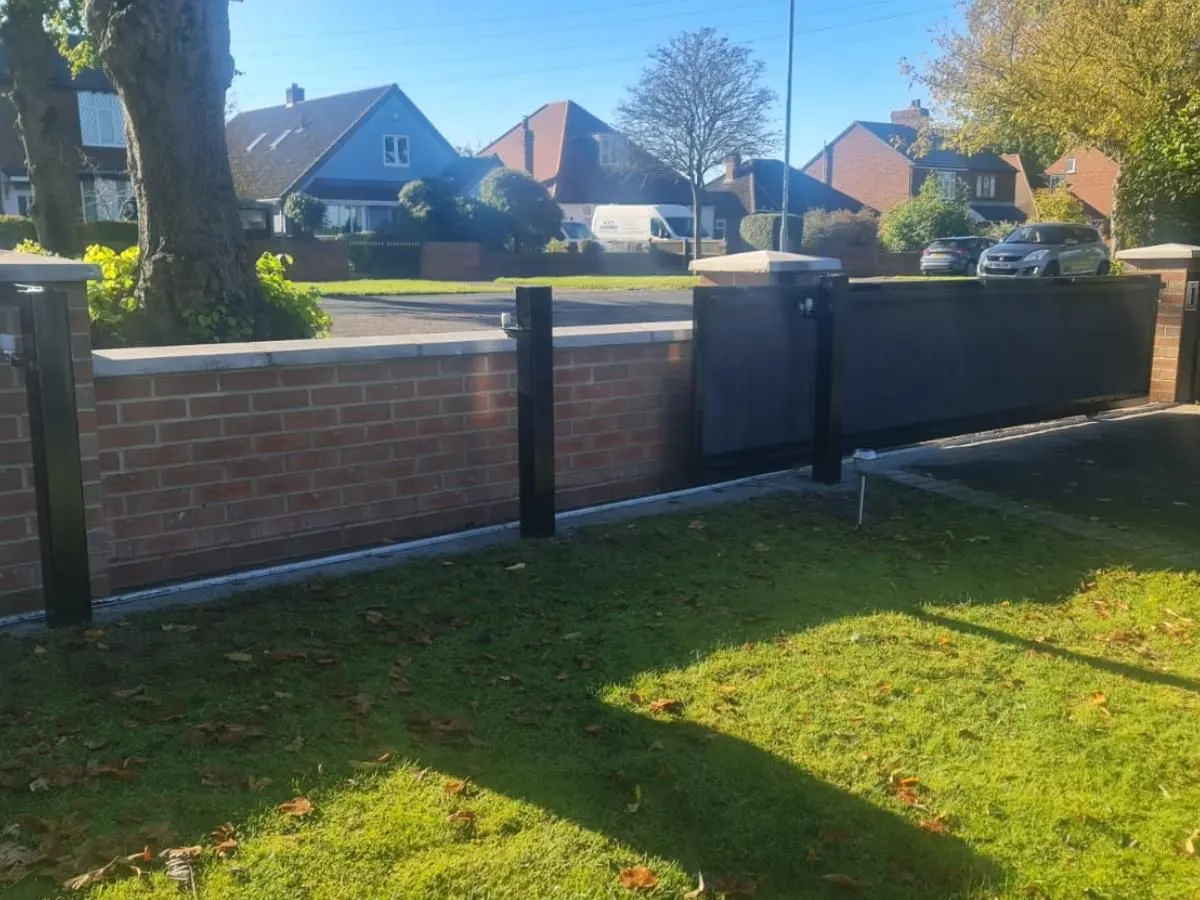
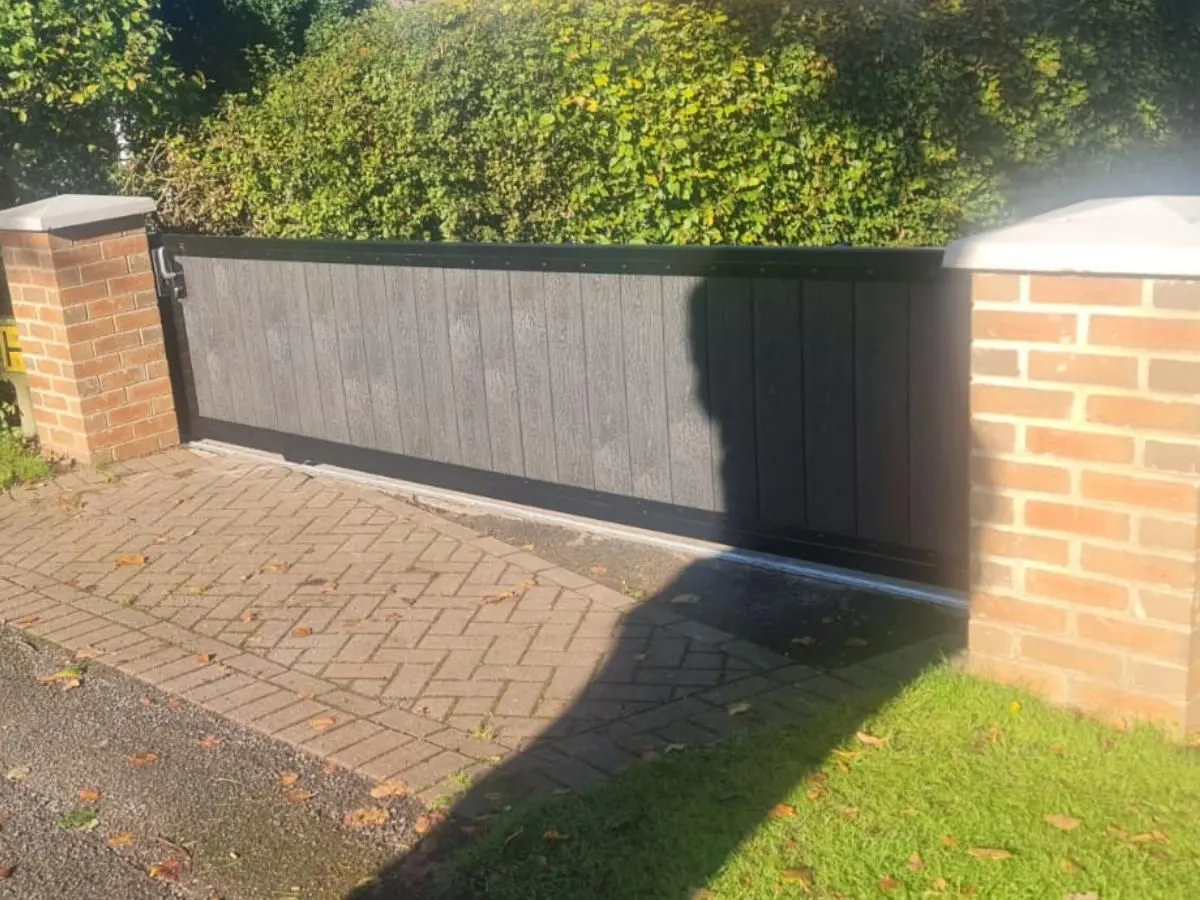
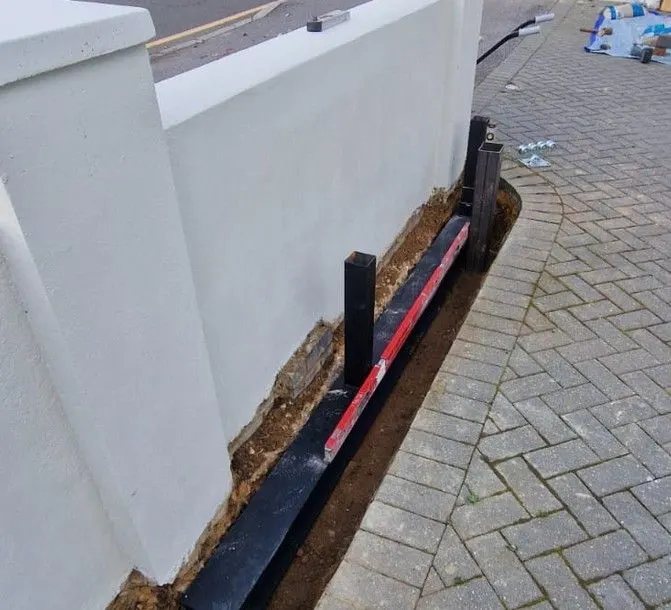
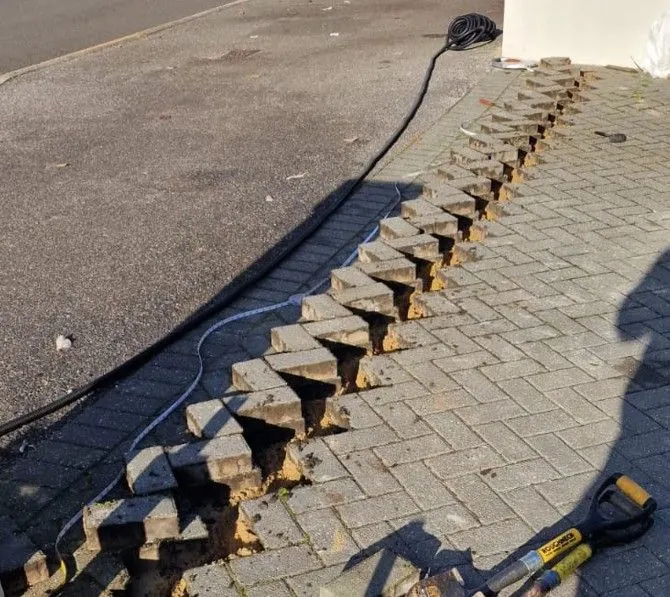
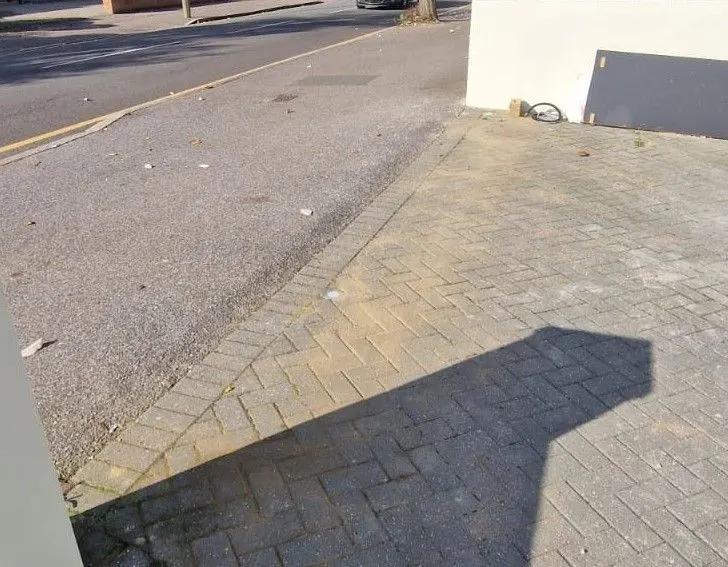
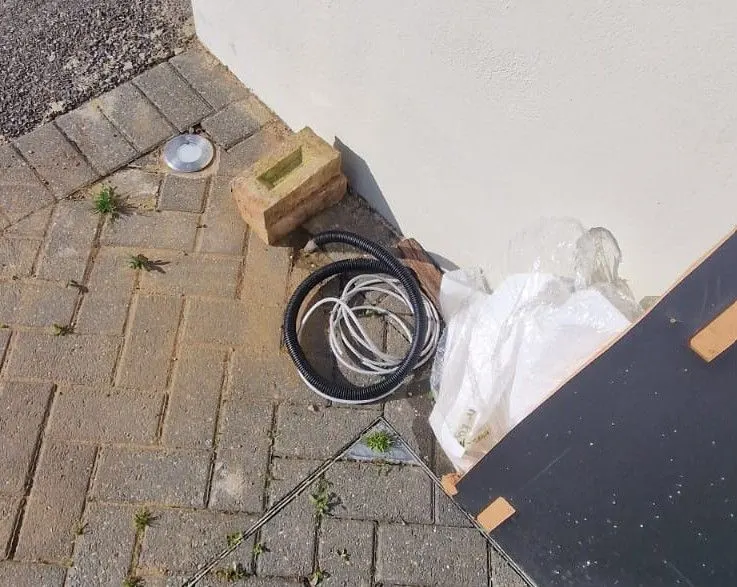
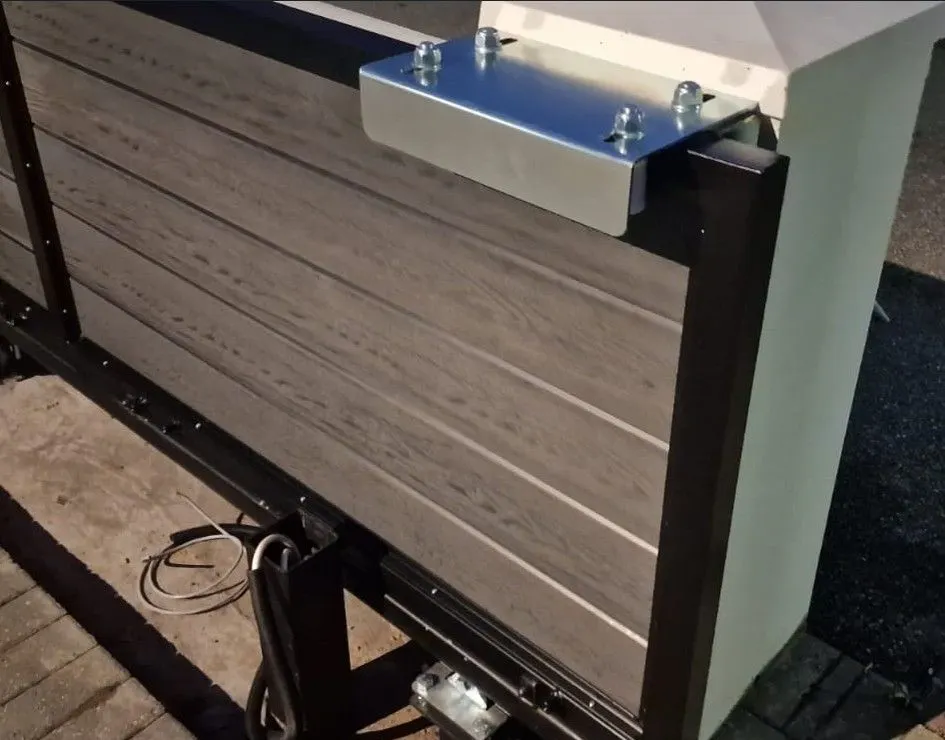
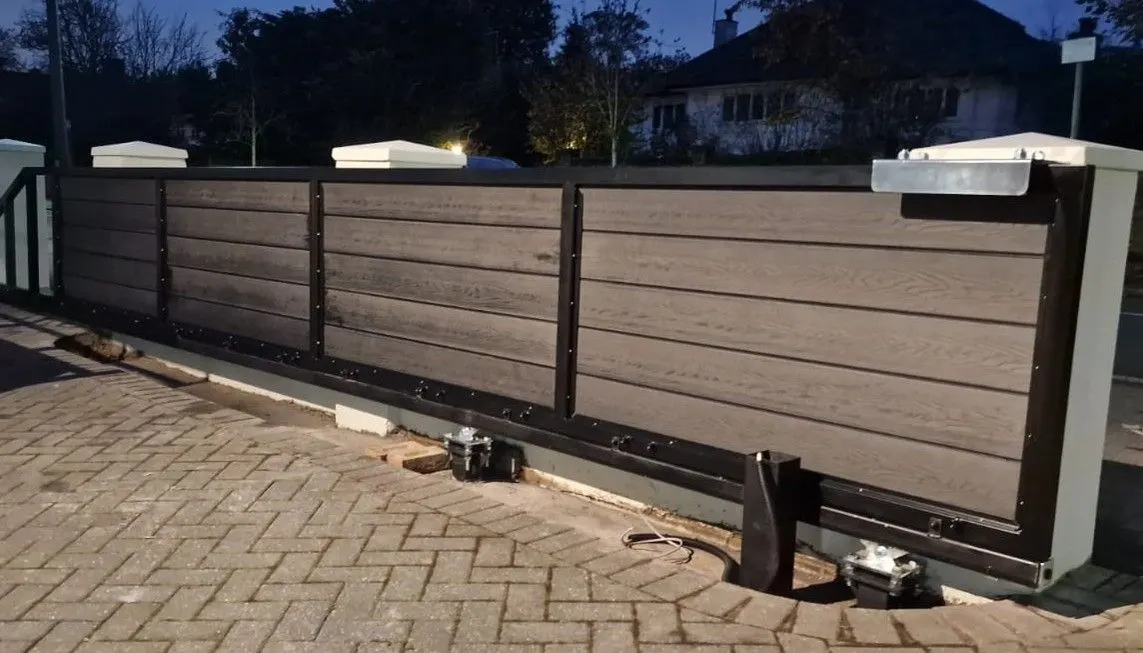
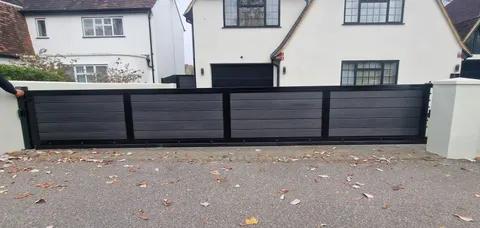
Here's a look at the various stages involved with installing an electric sliding gate. From digging out the trench for the sliding support mechanism, to running the power cables underneath the existing block paving driveway, to installing a remote access 6 metre wide automated sliding gate.
Automation on new gates, or retro-fitted to existing ones. Every town below has its own page.
Electric Gates Barnsley| Electric Gates Batley| Electric Gates Bradford| Electric Gates Castleford| Electric Gates Dewsbury| Electric Gates Doncaster| Electric Gates Garforth| Electric Gates Goole| Electric Gates Halifax| Electric Gates Harrogate| Electric Gates Holmfirth| Electric Gates Horsforth| Electric Gates Huddersfield| Electric Gates Keighley| Electric Gates Knottingley| Electric Gates Leeds| Electric Gates Pontefract| Electric Gates Rotherham| Electric Gates Sheffield| Electric Gates Skipton| Electric Gates Wakefield| Electric Gates Wetherby| Electric Gates York
Electric Gates Chesterfield| Electric Gates Corby| Electric Gates Derby| Electric Gates Kettering| Electric Gates Leicester| Electric Gates Loughborough| Electric Gates Lutterworth| Electric Gates Mansfield| Electric Gates Market Harborough| Electric Gates Melton Mowbray| Electric Gates Newark-on-Trent| Electric Gates Northampton| Electric Gates Nottingham| Electric Gates Swadlincote| Electric Gates Wellingborough| Electric Gates Worksop
Electric Gates Birmingham| Electric Gates Bromsgrove| Electric Gates Coventry| Electric Gates Droitwich Spa| Electric Gates Dudley| Electric Gates Hereford| Electric Gates Kidderminster| Electric Gates Redditch| Electric Gates Stourbridge| Electric Gates Stourport| Electric Gates Sutton Coldfield| Electric Gates Walsall| Electric Gates West Bromwich| Electric Gates Wolverhampton| Electric Gates Worcester
Electric Gates Berkhamsted| Electric Gates Borehamwood| Electric Gates Harpenden| Electric Gates Hemel Hempstead| Electric Gates Letchworth Garden City| Electric Gates Rickmansworth| Electric Gates St Albans| Electric Gates Stevenage| Electric Gates Tring| Electric Gates Watford| Electric Gates Welwyn Garden City
Electric Gates Basildon| Electric Gates Billericay| Electric Gates Braintree| Electric Gates Brentwood| Electric Gates Canvey Island| Electric Gates Chelmsford| Electric Gates Colchester| Electric Gates Harlow| Electric Gates Romford| Electric Gates Southend-on-Sea| Electric Gates Stanford-le-Hope| Electric Gates Wickford
Electric Gates Battersea| Electric Gates Beckenham| Electric Gates Bermondsey| Electric Gates Brentford| Electric Gates Brixton| Electric Gates Bromley| Electric Gates Chelsea| Electric Gates Croydon| Electric Gates Deptford| Electric Gates Ealing| Electric Gates Enfield| Electric Gates Fulham| Electric Gates Greenwich| Electric Gates Hounslow| Electric Gates Kingston upon Thames| Electric Gates Mitcham| Electric Gates Northwood| Electric Gates Orpington| Electric Gates Peckham| Electric Gates Putney| Electric Gates Richmond| Electric Gates Rotherhithe| Electric Gates South London| Electric Gates Streatham| Electric Gates Sutton| Electric Gates Teddington| Electric Gates Twickenham| Electric Gates Uxbridge| Electric Gates Walworth| Electric Gates Wandsworth| Electric Gates Wembley| Electric Gates Wimbledon| Electric Gates Woolwich
Electric Gates Banstead| Electric Gates Caterham| Electric Gates Chertsey| Electric Gates Dorking| Electric Gates Epsom| Electric Gates Guildford| Electric Gates Horley| Electric Gates Leatherhead| Electric Gates Oxted| Electric Gates Redhill| Electric Gates Reigate| Electric Gates Sunbury-on-Thames| Electric Gates Tadworth| Electric Gates Walton-on-Thames| Electric Gates Woking
Electric Gates Brighton| Electric Gates Chichester| Electric Gates Crawley| Electric Gates East Grinstead| Electric Gates Henfield| Electric Gates Horsham| Electric Gates Hove| Electric Gates Littlehampton| Electric Gates Portslade| Electric Gates Royal Tunbridge Wells| Electric Gates Sevenoaks| Electric Gates Shoreham-by-Sea| Electric Gates Southwick| Electric Gates Steyning| Electric Gates Storrington| Electric Gates Uckfield| Electric Gates Worthing
Electric Gates Bath| Electric Gates Bridgwater| Electric Gates Bristol| Electric Gates Cheltenham| Electric Gates Cirencester| Electric Gates Frome| Electric Gates Gloucester| Electric Gates Midsomer Norton| Electric Gates Portishead| Electric Gates Stroud| Electric Gates Taunton| Electric Gates Weston-super-Mare| Electric Gates Yeovil
Electric Gates Bodmin| Electric Gates Camborne| Electric Gates Dartmouth| Electric Gates Exeter| Electric Gates Falmouth| Electric Gates Launceston| Electric Gates Newquay| Electric Gates Paignton| Electric Gates Penzance| Electric Gates Plymouth| Electric Gates St Austell| Electric Gates St Ives| Electric Gates Tavistock| Electric Gates Torquay| Electric Gates Truro
Electric Gates Abergavenny| Electric Gates Barry| Electric Gates Blackwood| Electric Gates Bridgend| Electric Gates Caerphilly| Electric Gates Cardiff| Electric Gates Cwmbran| Electric Gates Llantwit Major| Electric Gates Merthyr Tydfil| Electric Gates Newport| Electric Gates Penarth| Electric Gates Pontypool| Electric Gates Pontypridd| Electric Gates Port Talbot| Electric Gates Swansea
Not listed? Send us your postcode and we will confirm whether we can cover you — either way, you will get a straight answer. See all areas we cover.


Founded in 2023. Composite Gates UK has brought together quality British Manufacturing with personal, local services to provide a unique composite gate & composite fencing proposition that is gradually widening its reach across the UK.
Through local companies you are provide with a total composite gate and metal gates service from site survey and measurement, to fabrication and installation.
Steel frames can be galvanised or zinc primed and then powder coated finished to ensure strong, long lasting frames with a selection of composite infill panels. Almost any colour fame can be selected. Additional gate personalisation can be added with arch top finishes, finials and screens for a truley bespoke composite gate, or metal gate service.
All our local fabricators are skilled working with metal, so if a set of composite gates are outside your budget they can also build and install metal gates.
We provide the perfect one stop experience for customers looking for bespoke driveway gates, garden gates and side gates. In a number of locations we can provide electric gates too, and a supply and fit for select composite fencing across parts of the UK.
© 2026 All Rights Reserved | Composite Gates UK